
Designs.
Pro2s
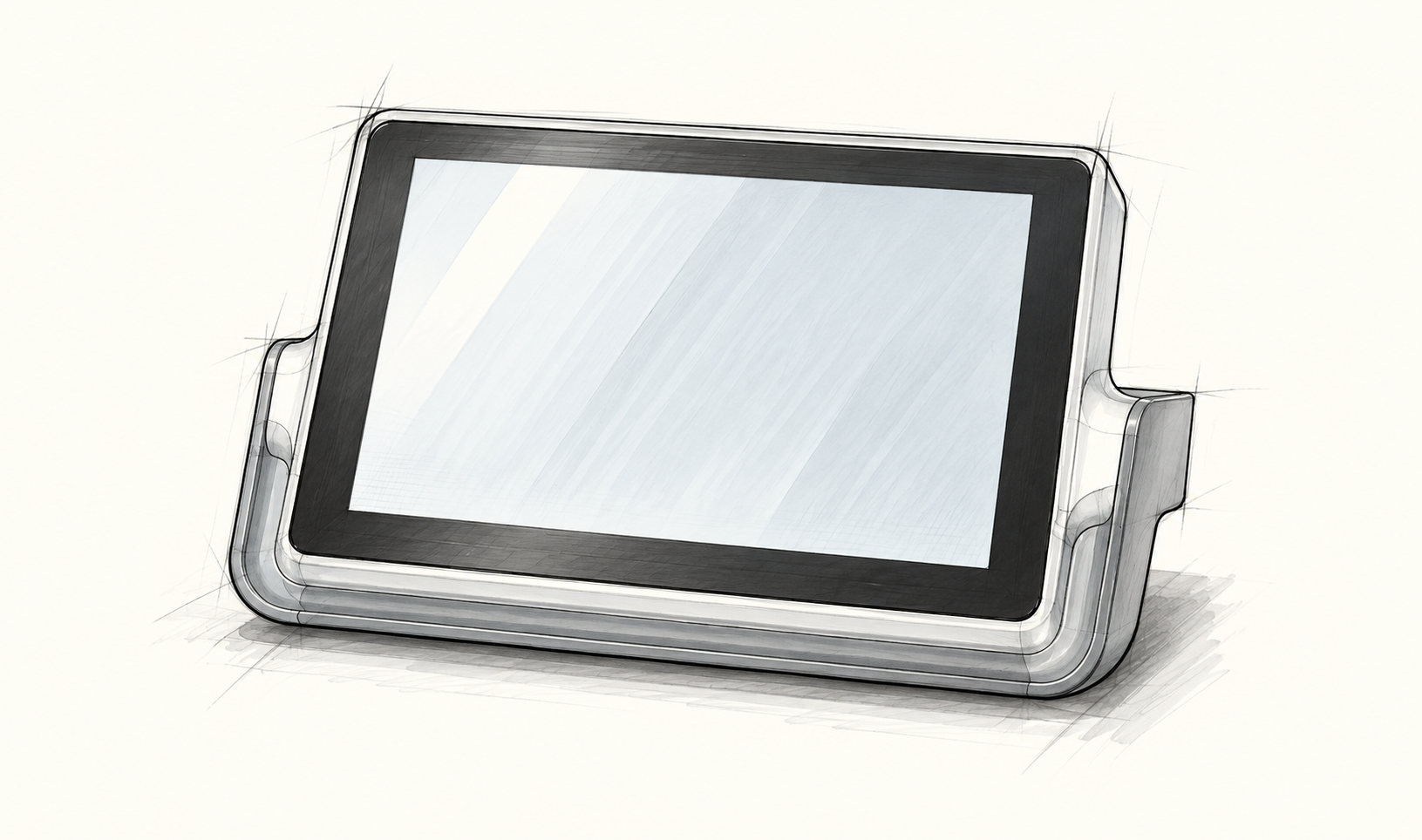
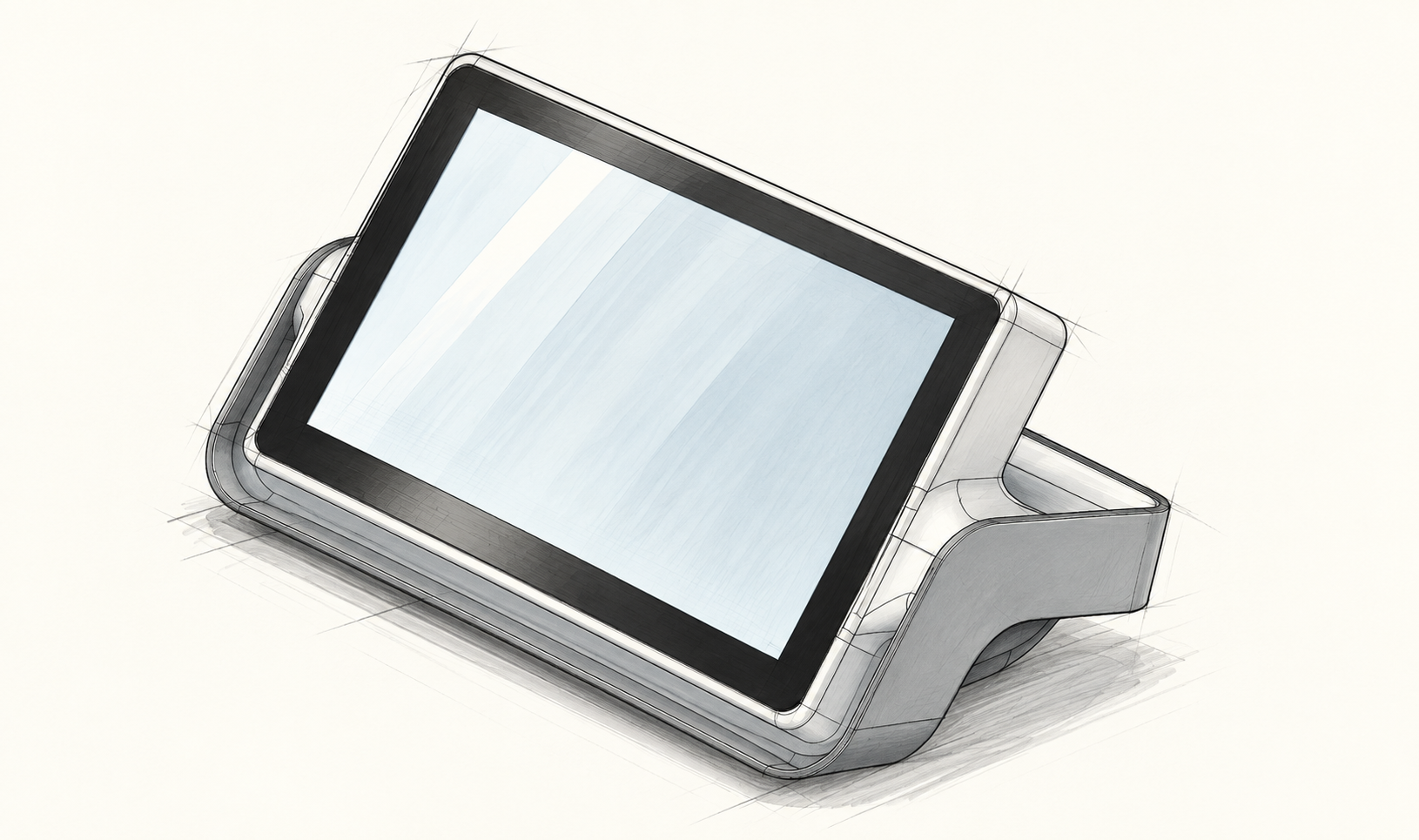
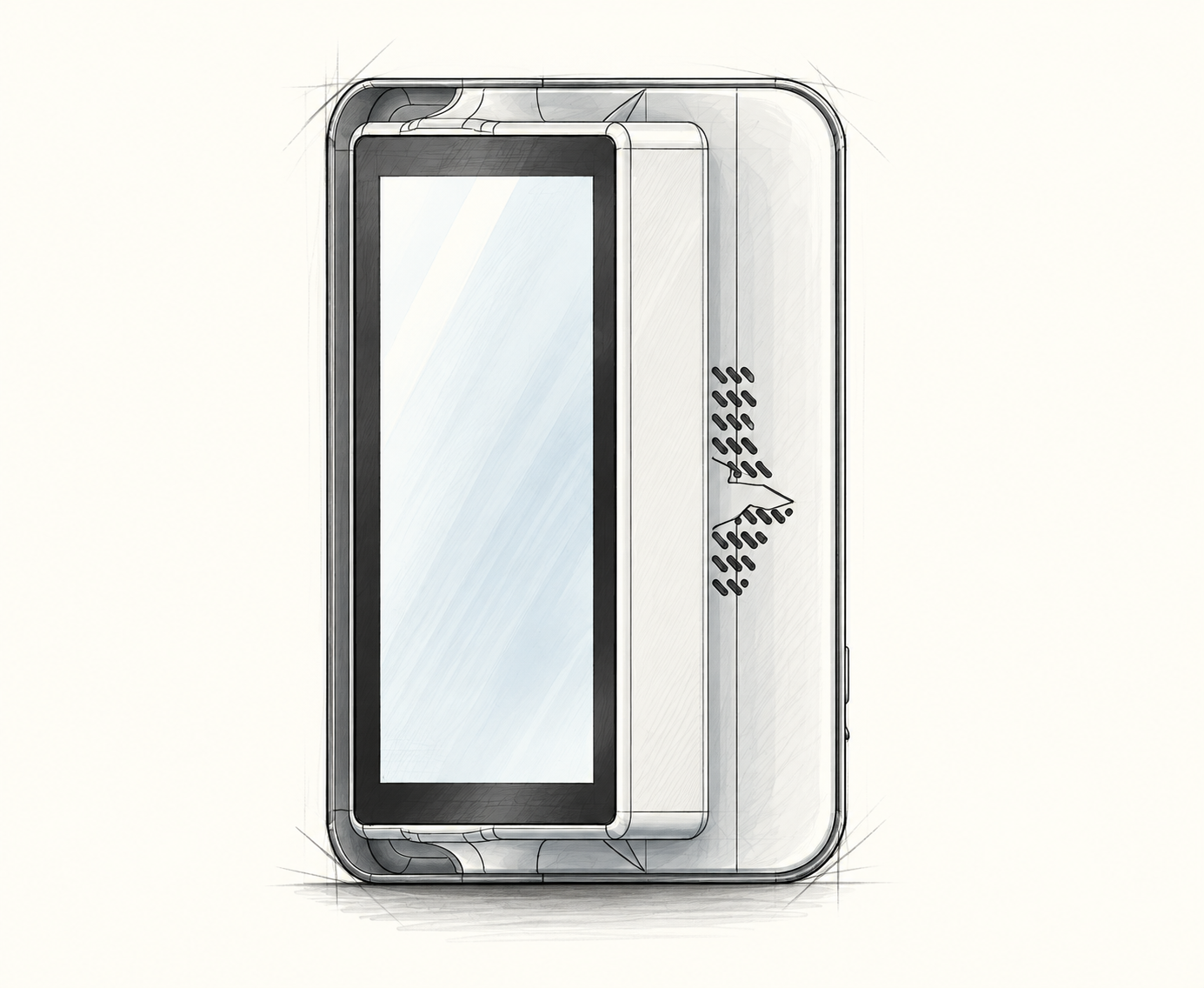
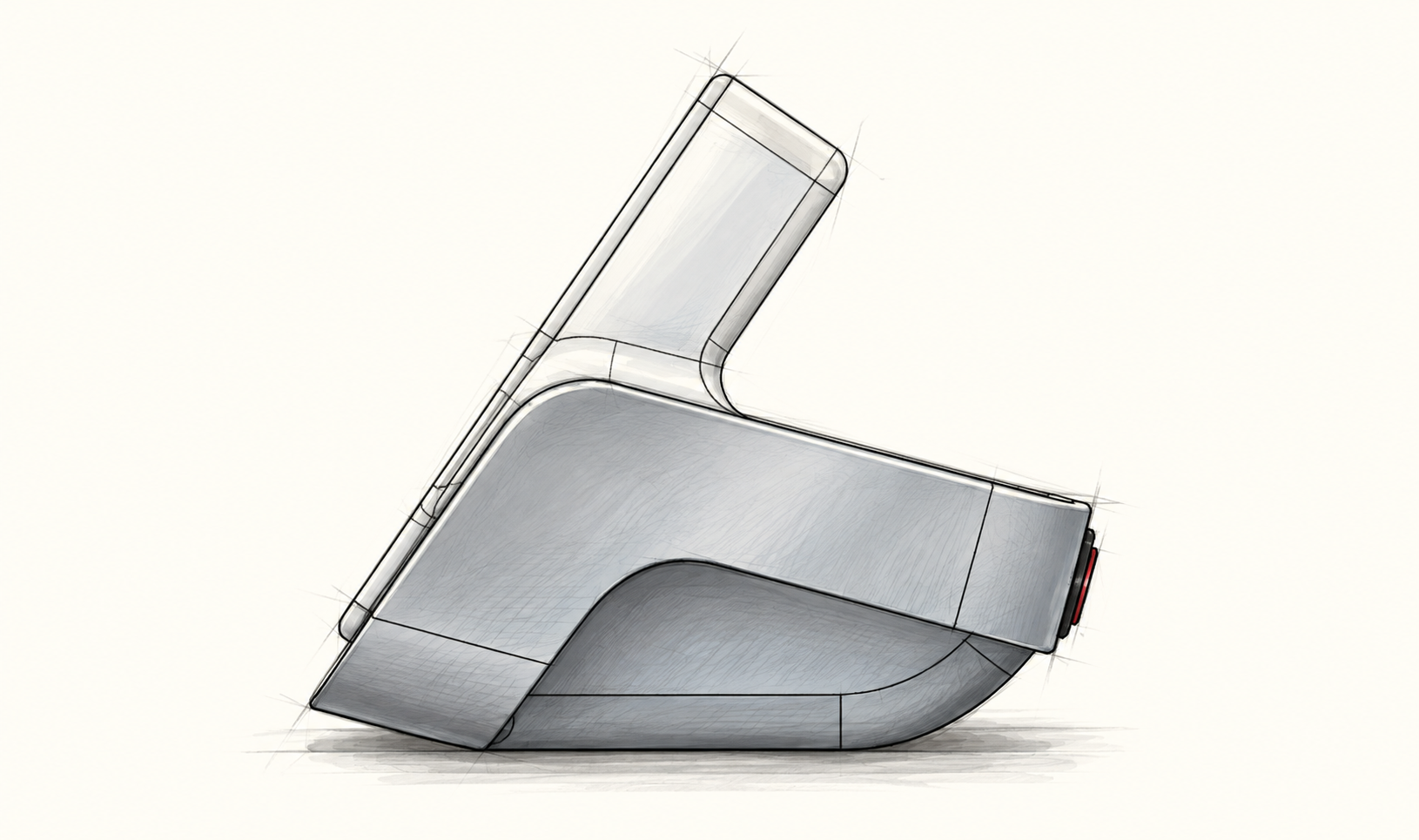
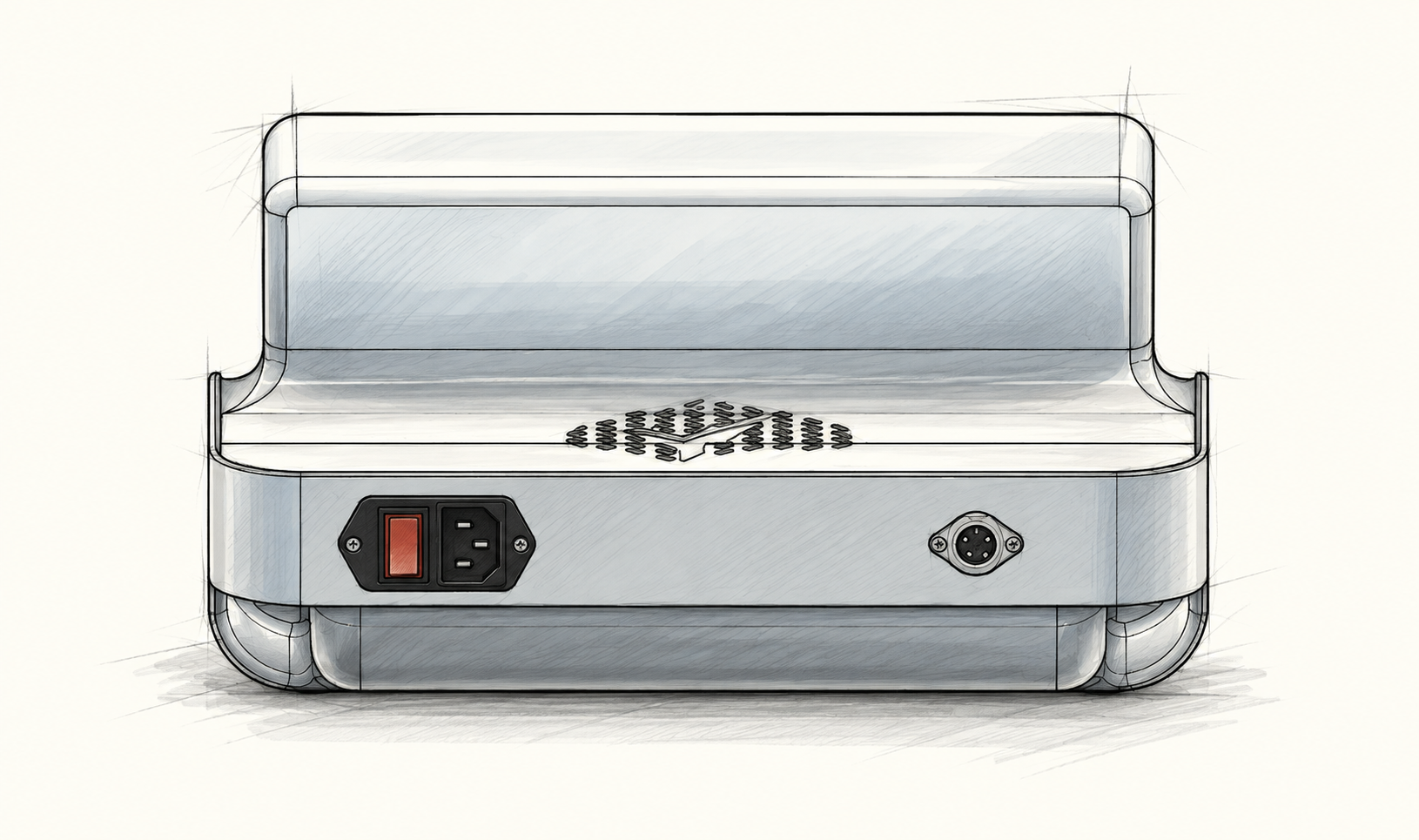
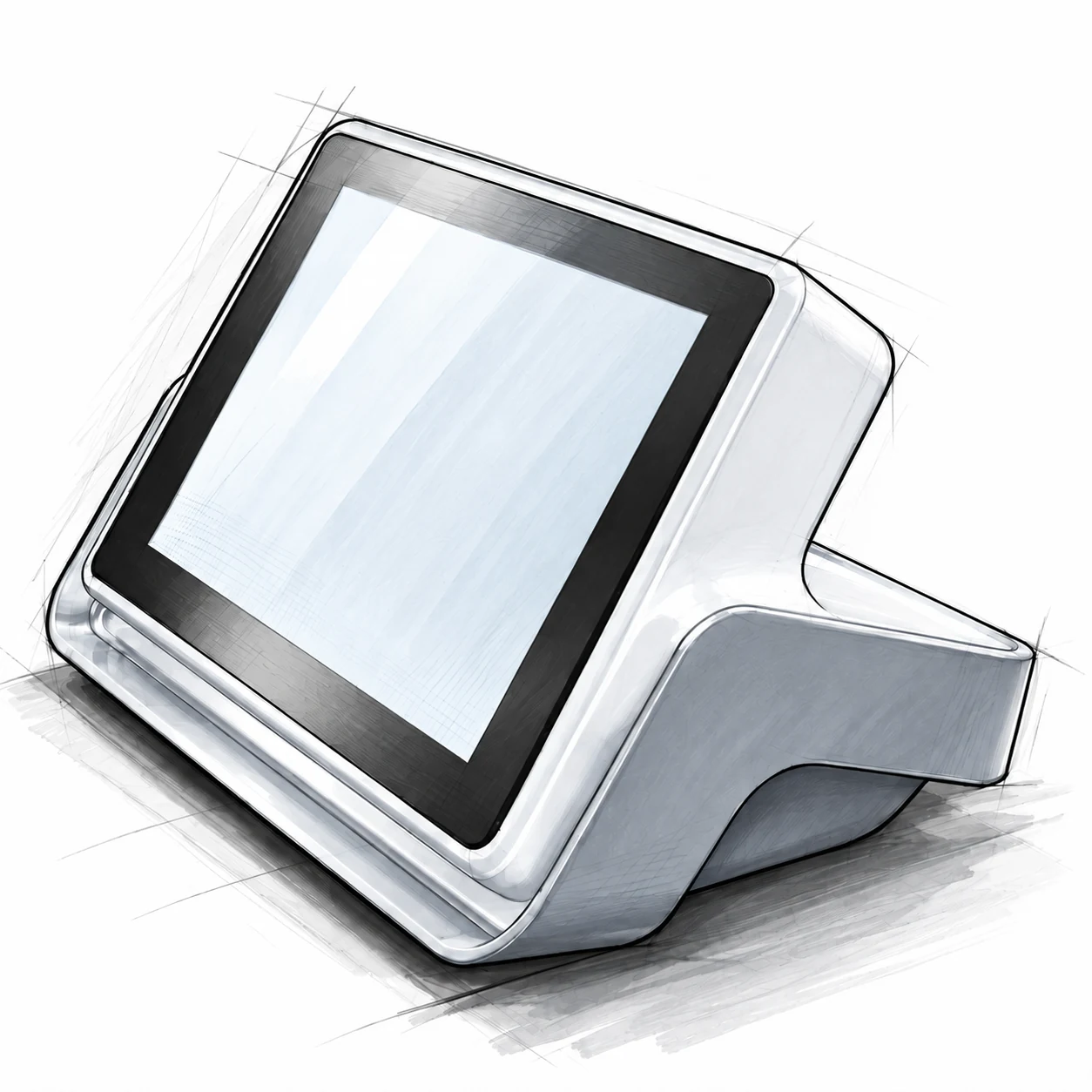
I found so much neuromodulation equipment visually dull: square boxes, rigid lines, little attention to the object itself. For Pro2s, a non-invasive brain stimulation device, I wanted to explore a more organic form.
Together with industrial designer Aura Rodríguez, I worked on a console shaped by softer, more biological curves. The angled screen flows into a sculpted enclosure and base. The aim was to give the device a considered aesthetic, with a shape that felt less rigid.
Designed with Aura Rodríguez, industrial designer.
Focus8
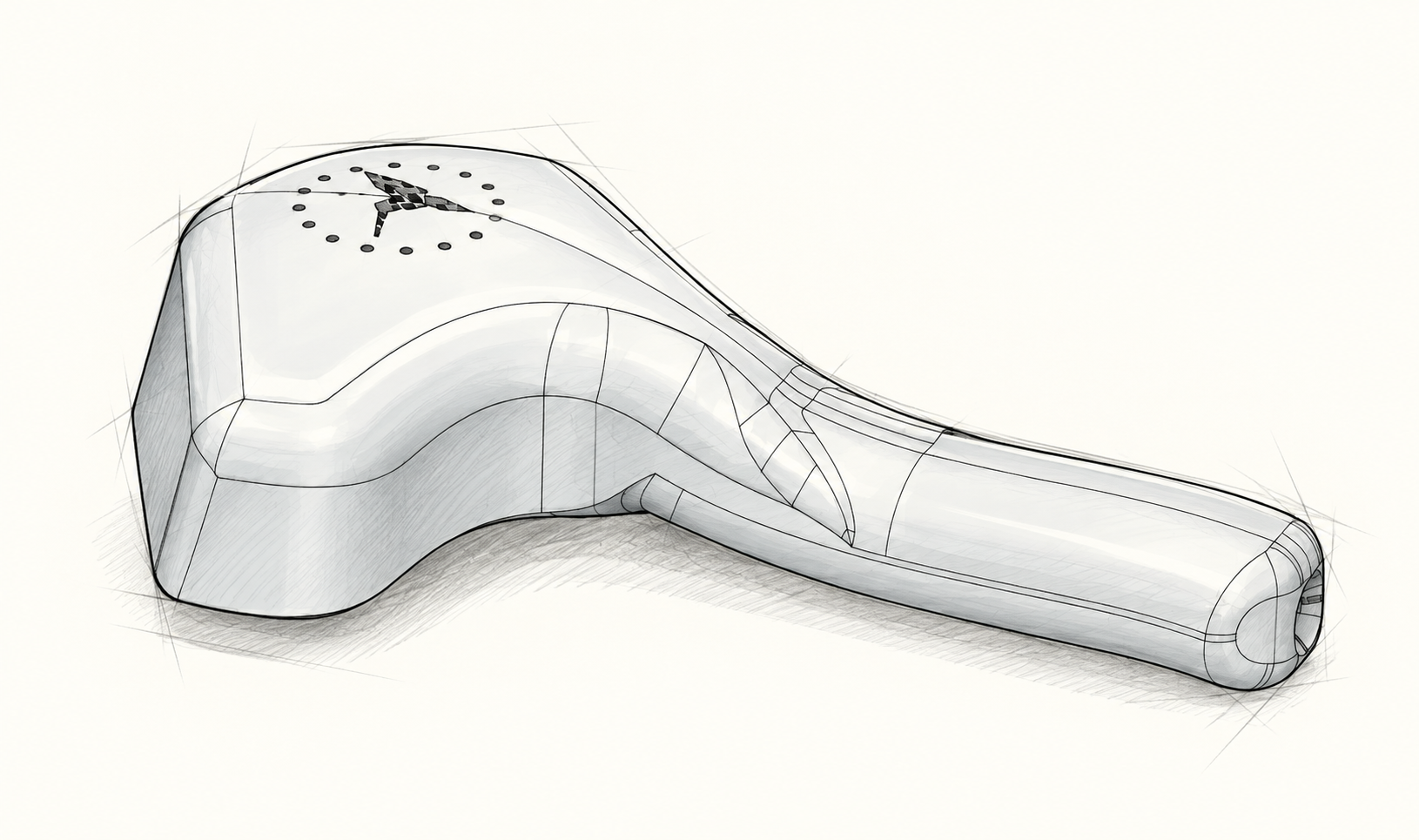
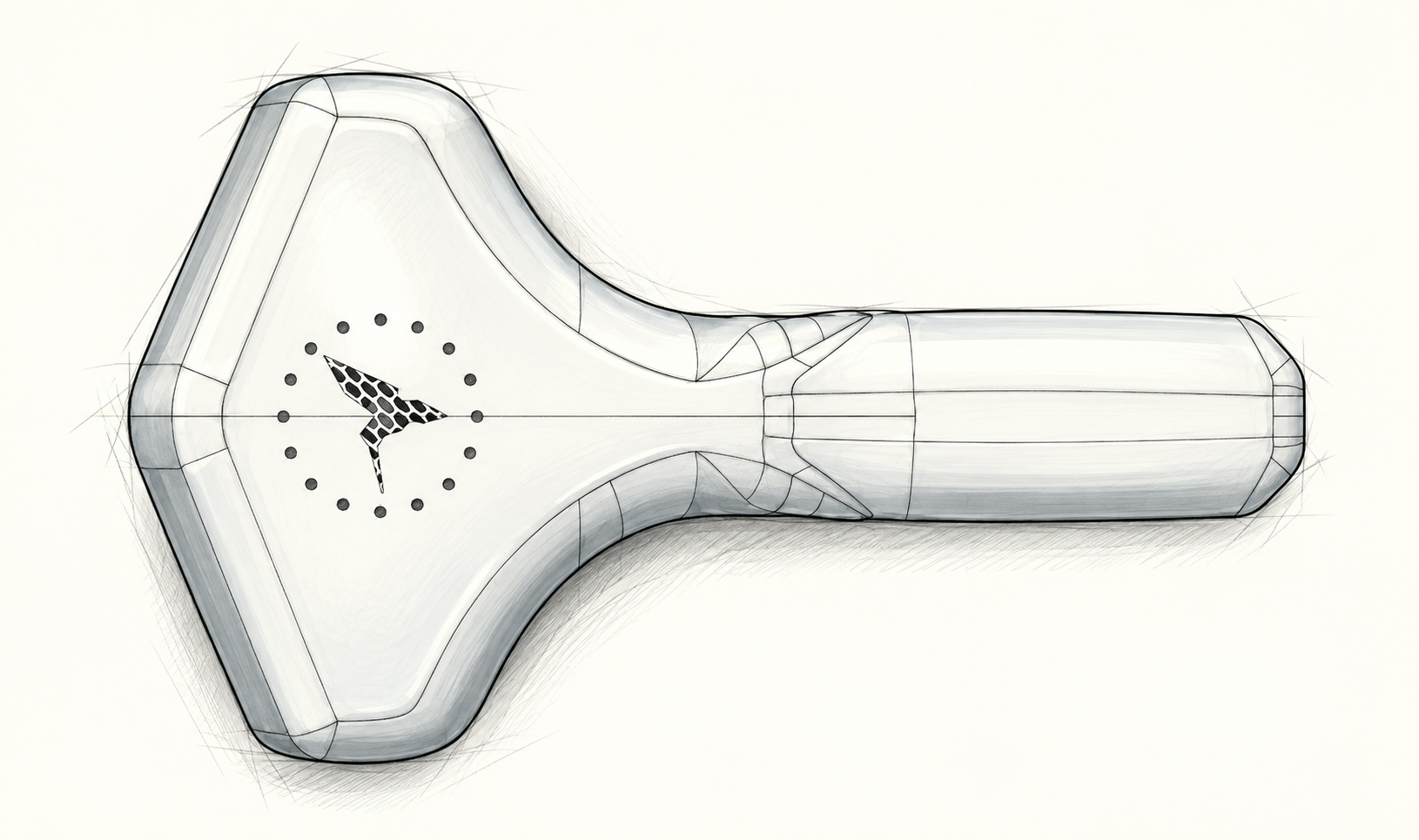
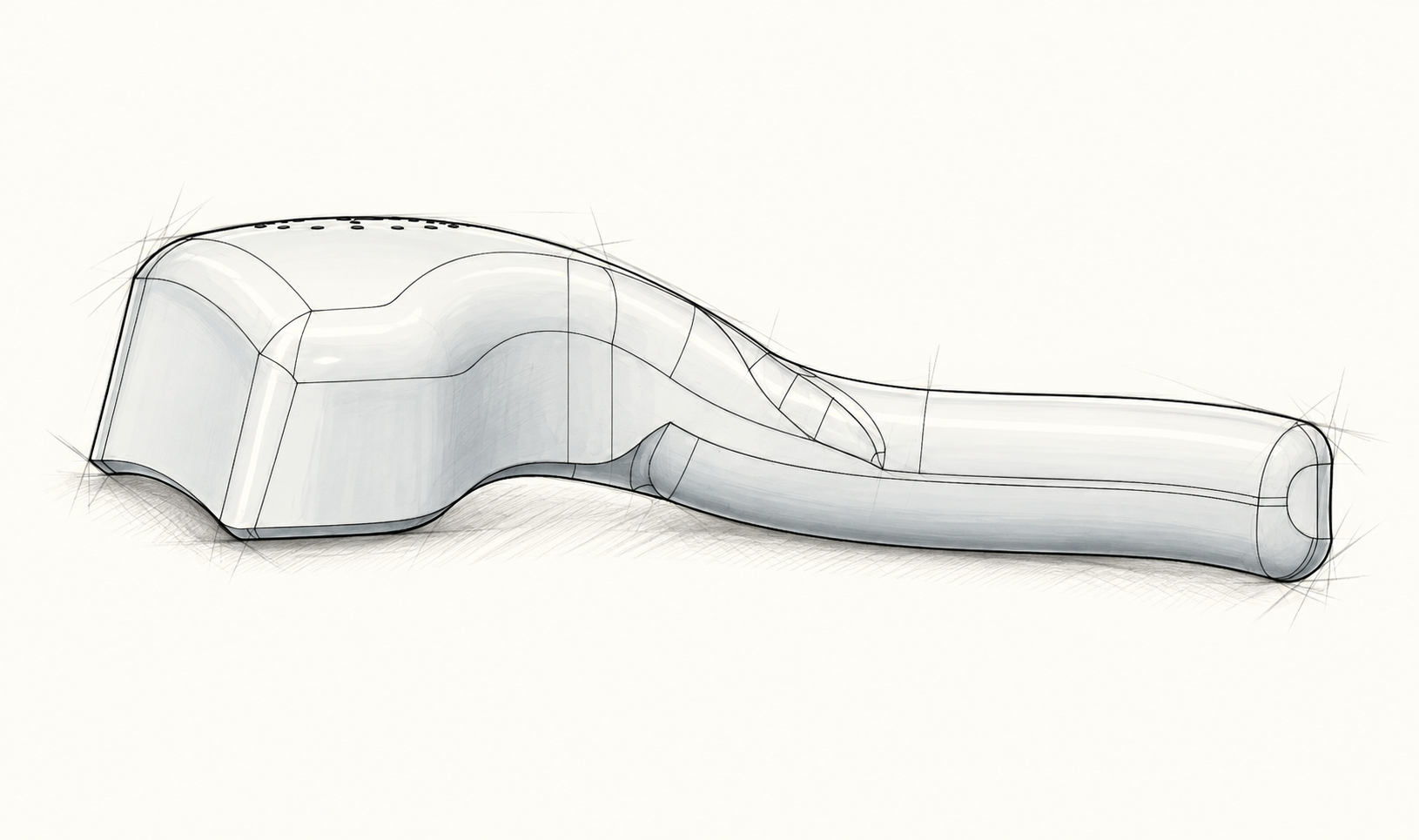
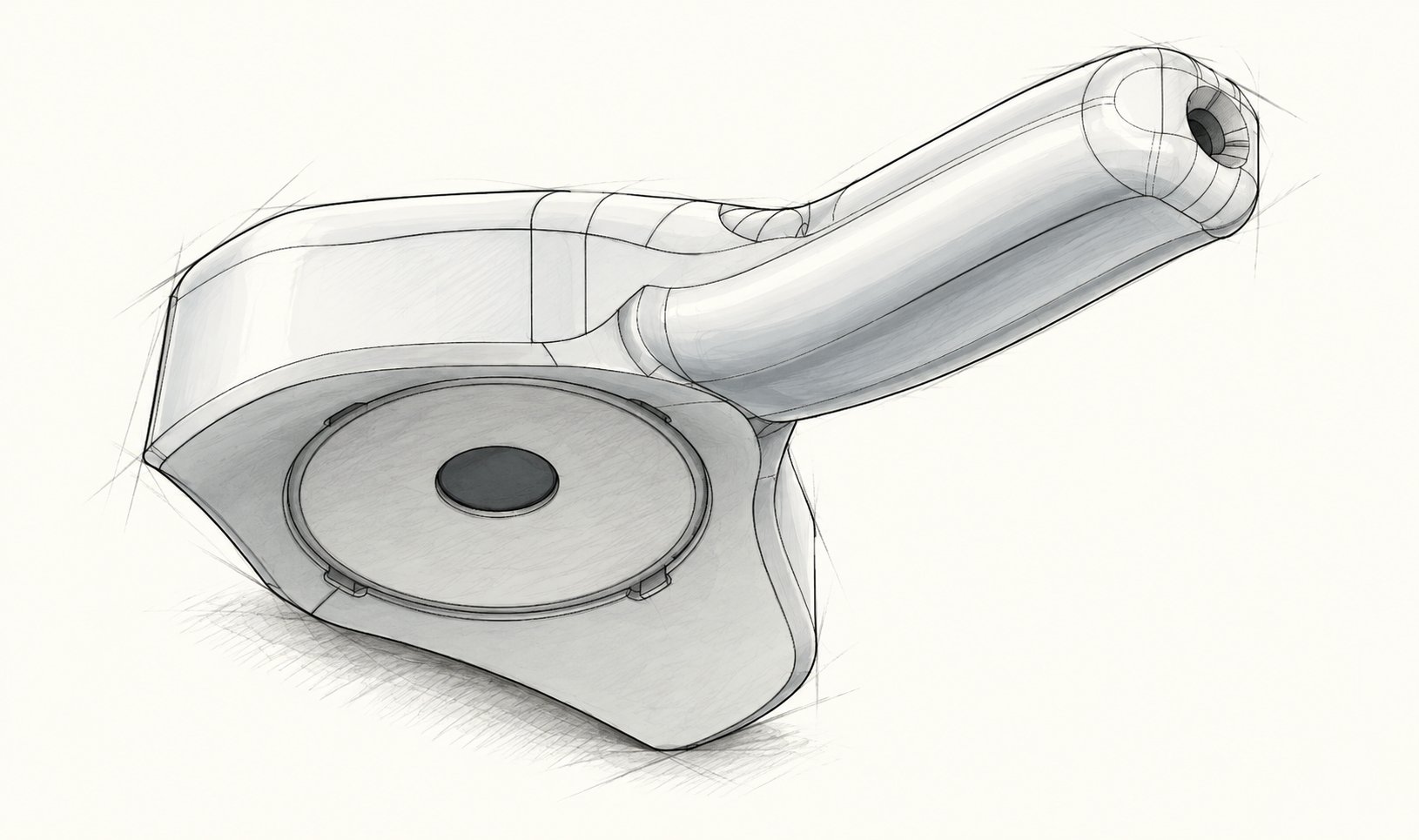
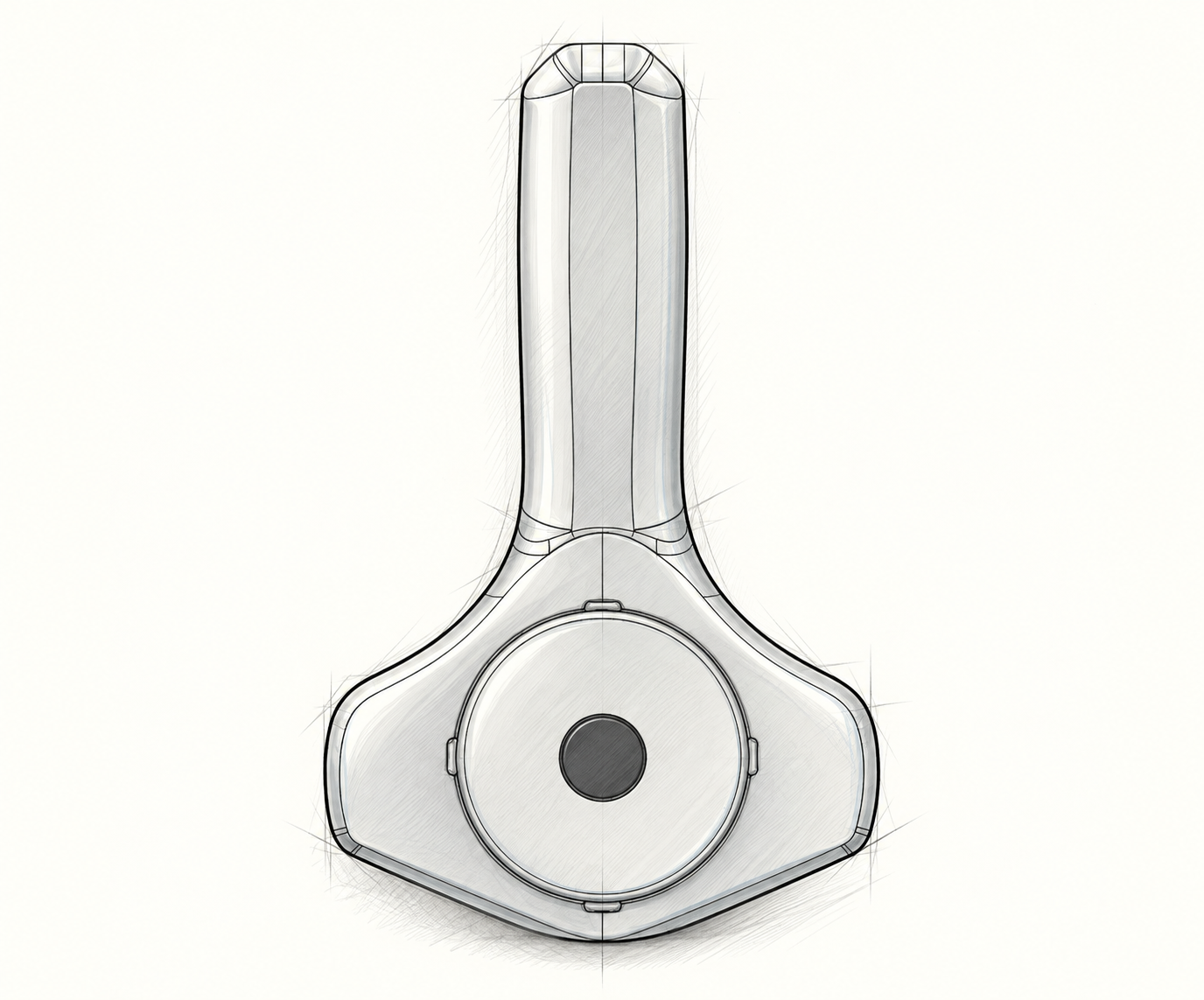
Figure-eight coils tend to look very much like an eight. A truly groundbreaking observation on my part. With Focus8, I wanted to hide that geometry inside a more organic housing. My main reference was the manta ray: its broad body, flowing outline, and continuous curves.
The rounded head narrows into the handle, translating that reference into a handheld object. The figure-eight coil is still inside; the outer shell gives it a different visual identity. This is one of the clearest examples of how biological forms find their way into my hardware designs.
Circular coil
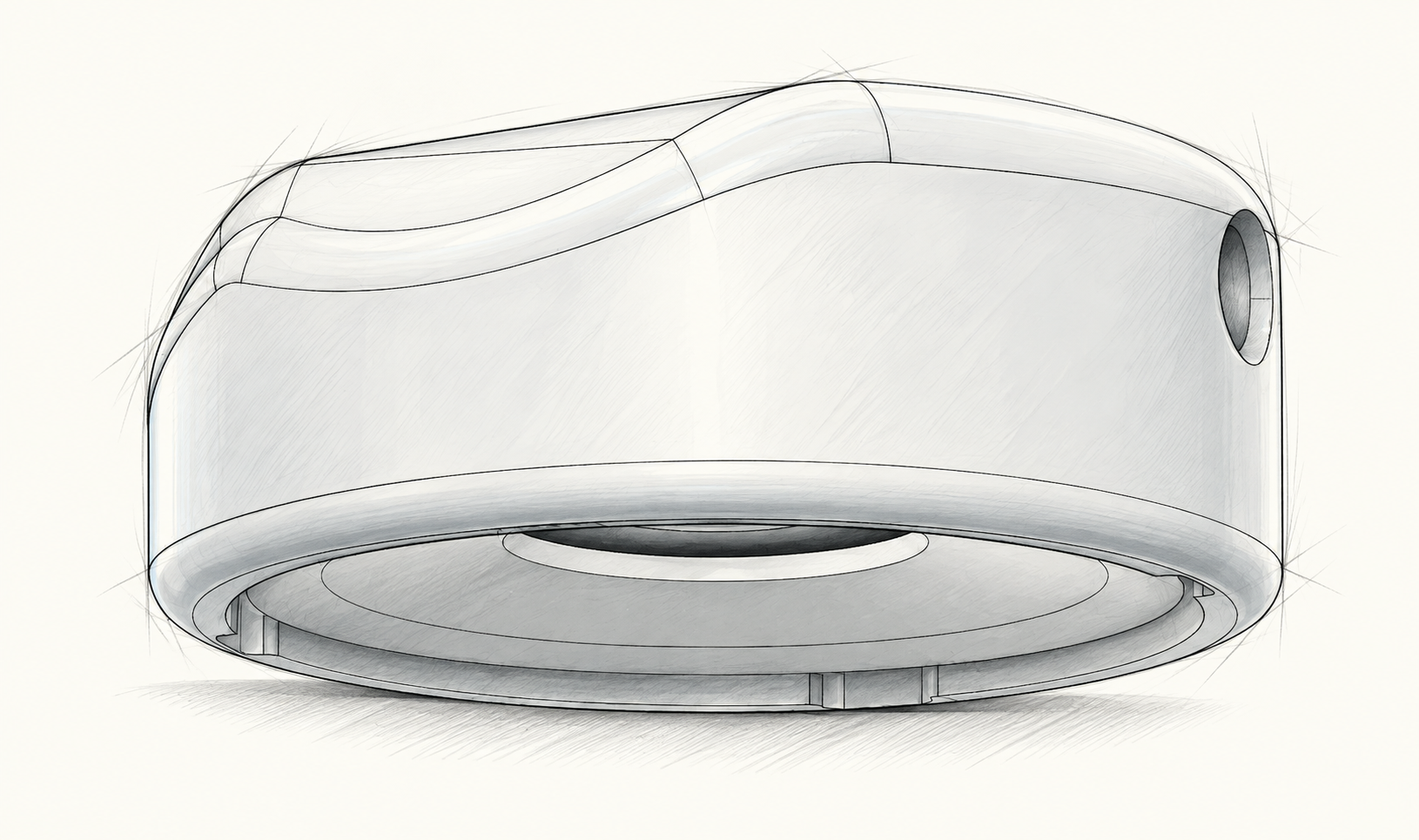
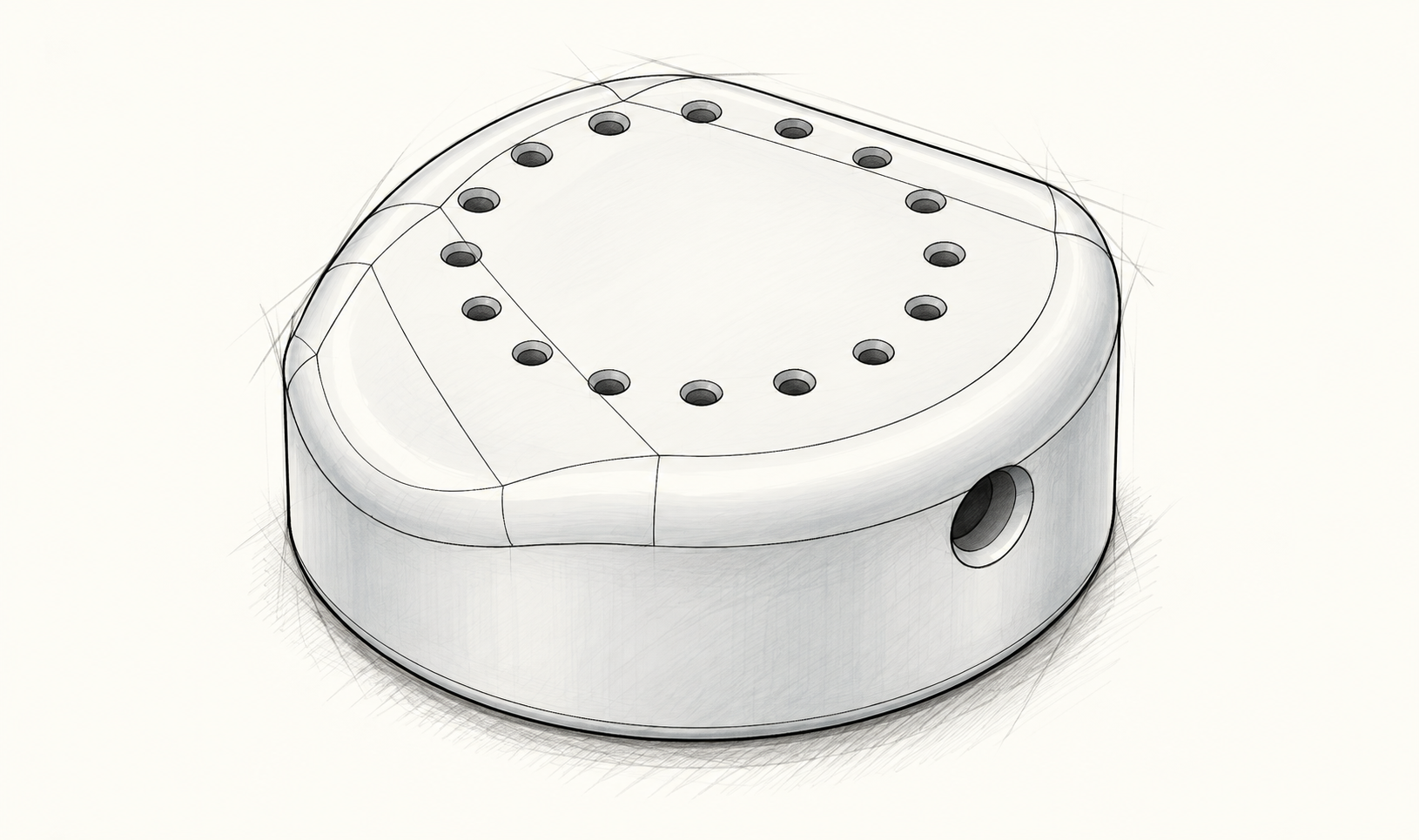
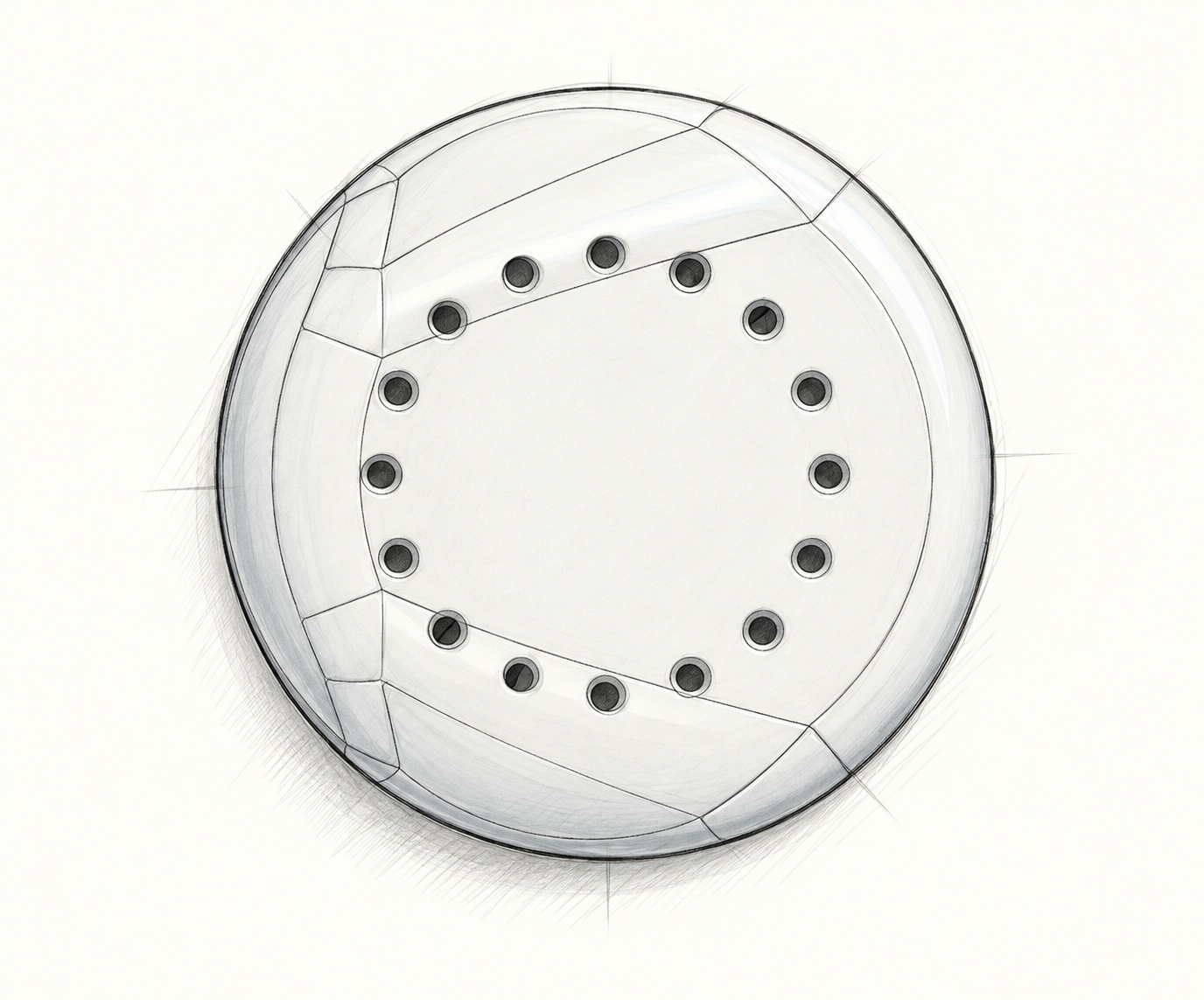
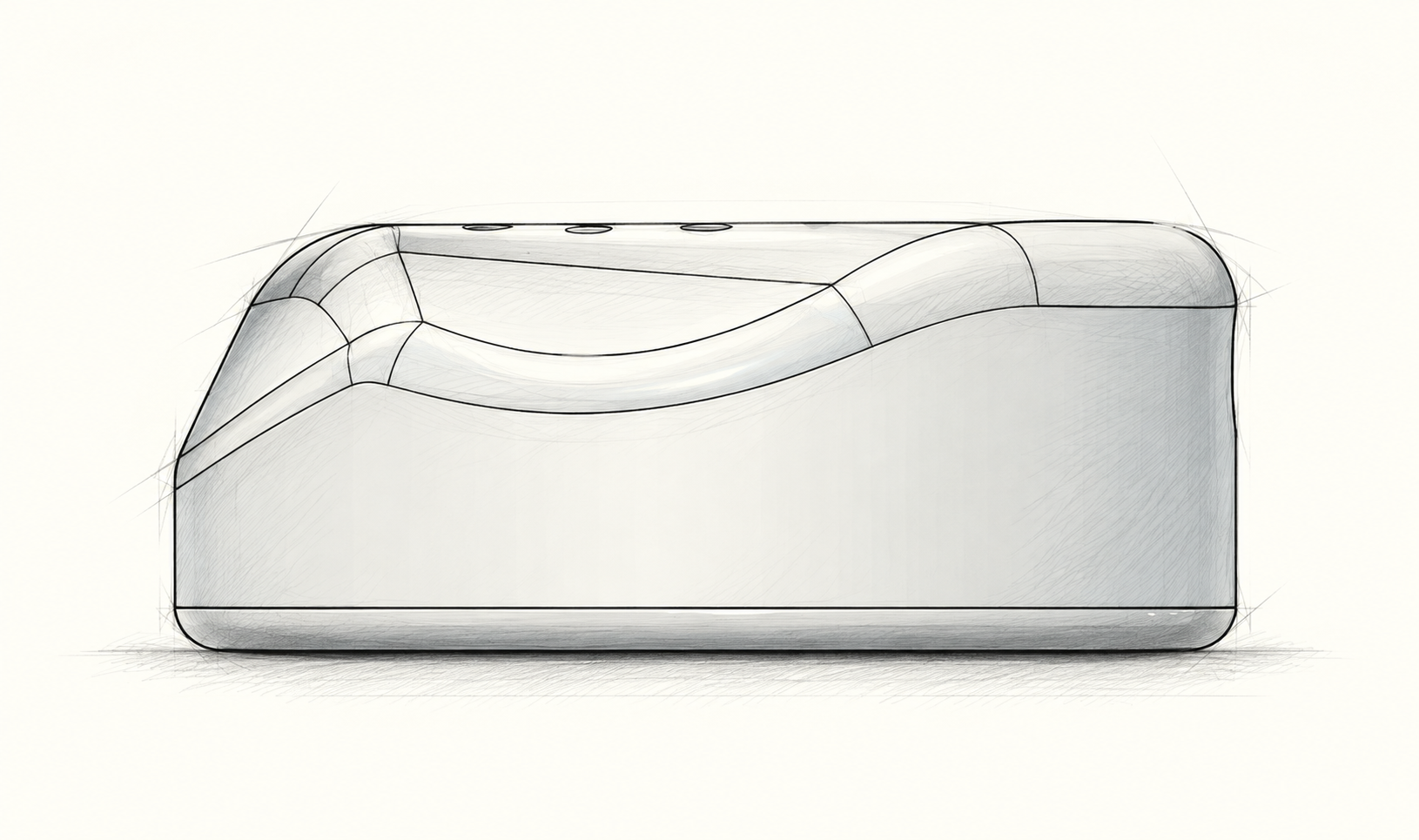
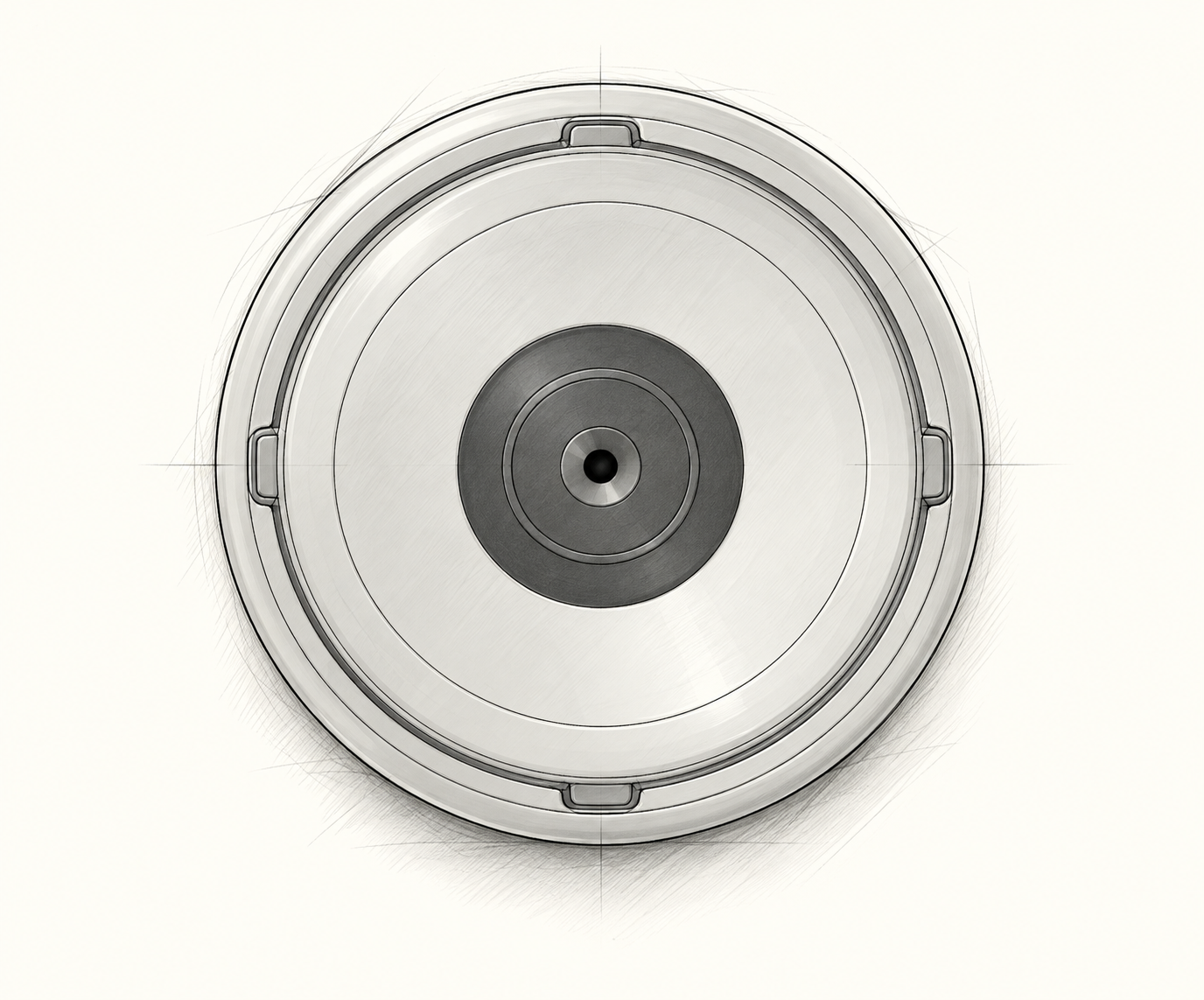
When we started updating our circular coil, we felt the original design was too simple. It's a circular coil; the shape isn't rocket science. But I've always been drawn to more organic forms.
I wanted to bring the same cuts and sculpted lines of Pro2s into a coil-shaped housing, giving the two objects a shared visual language. Yes, sometimes I love to make things unnecessarily complicated.
High intensity coil
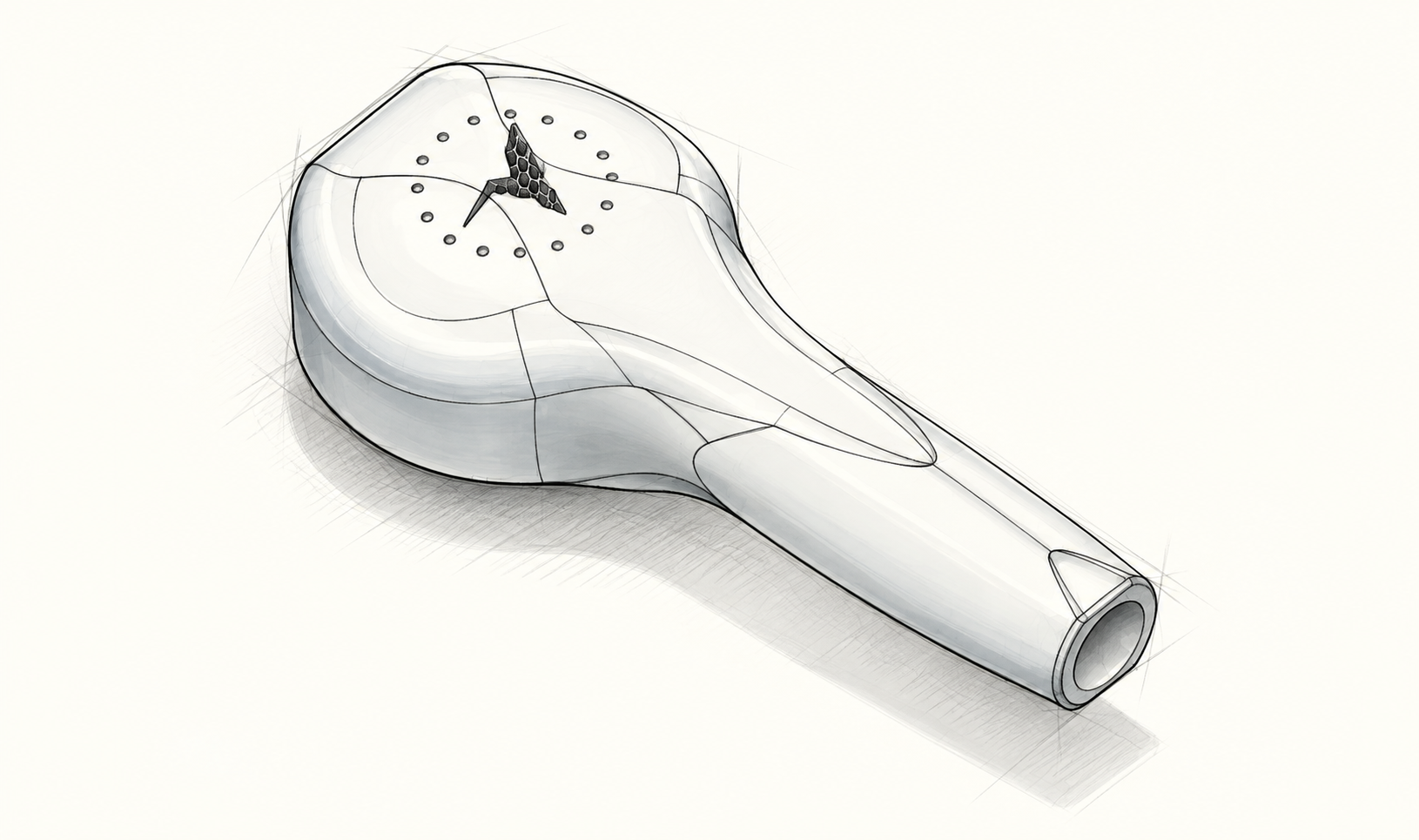
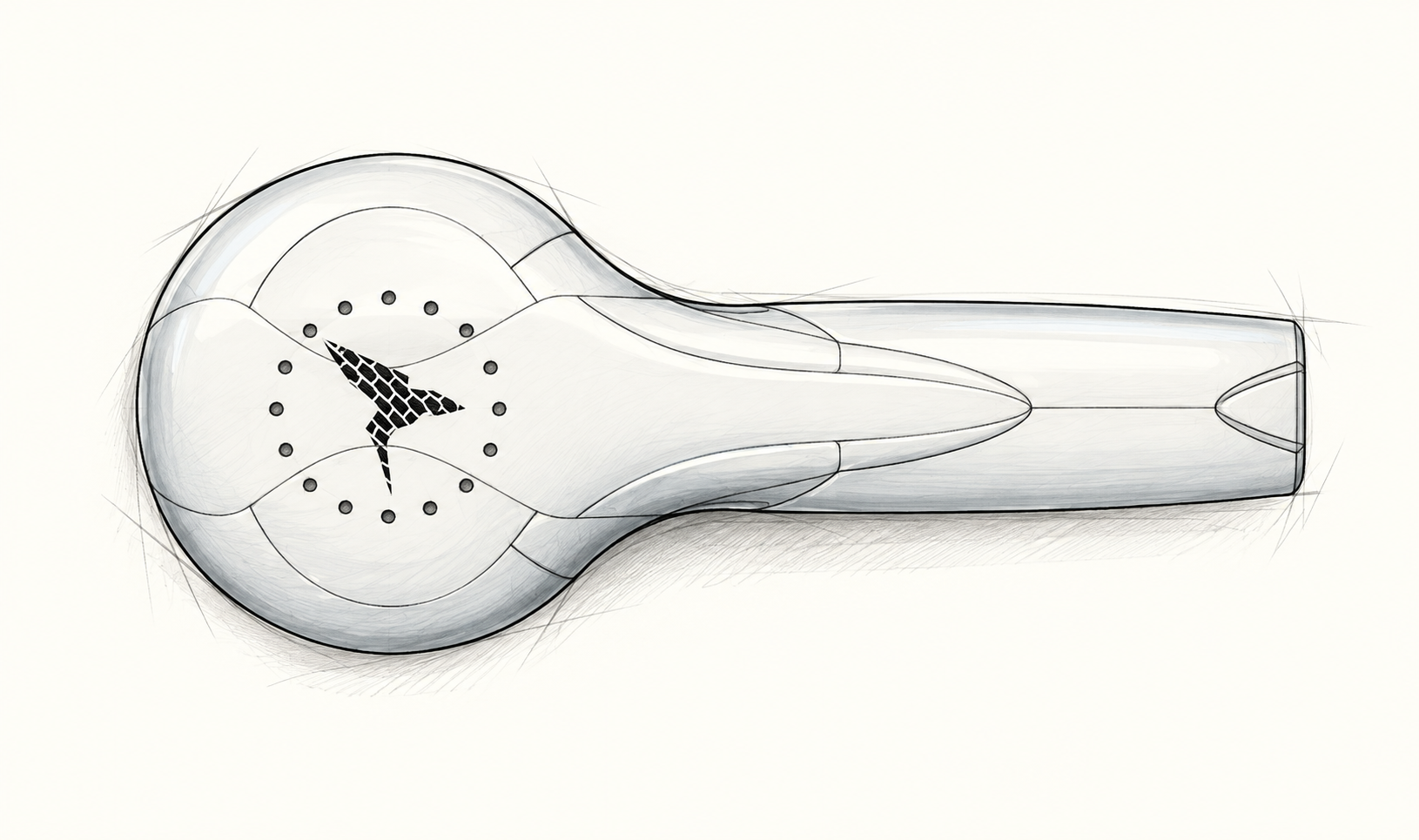
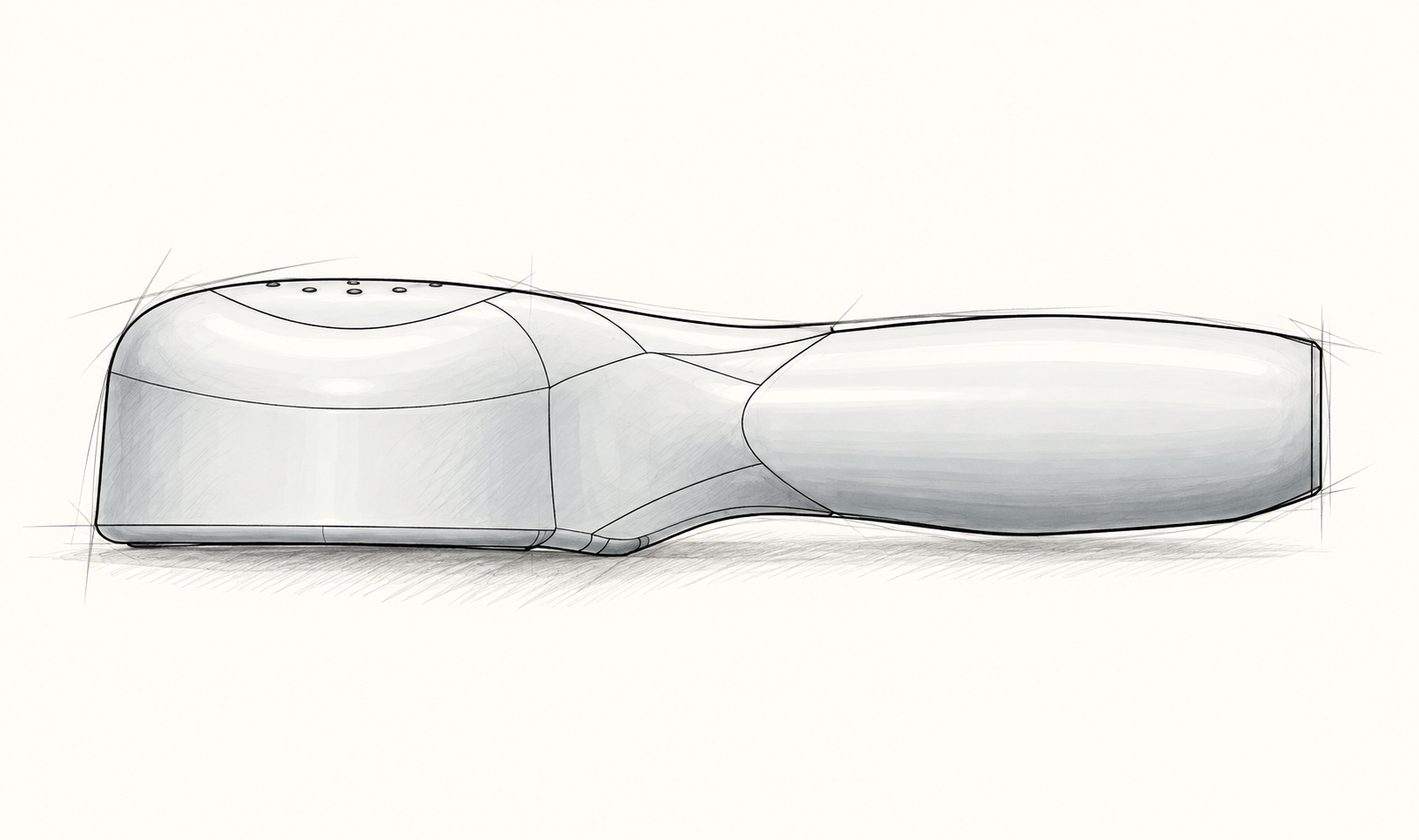
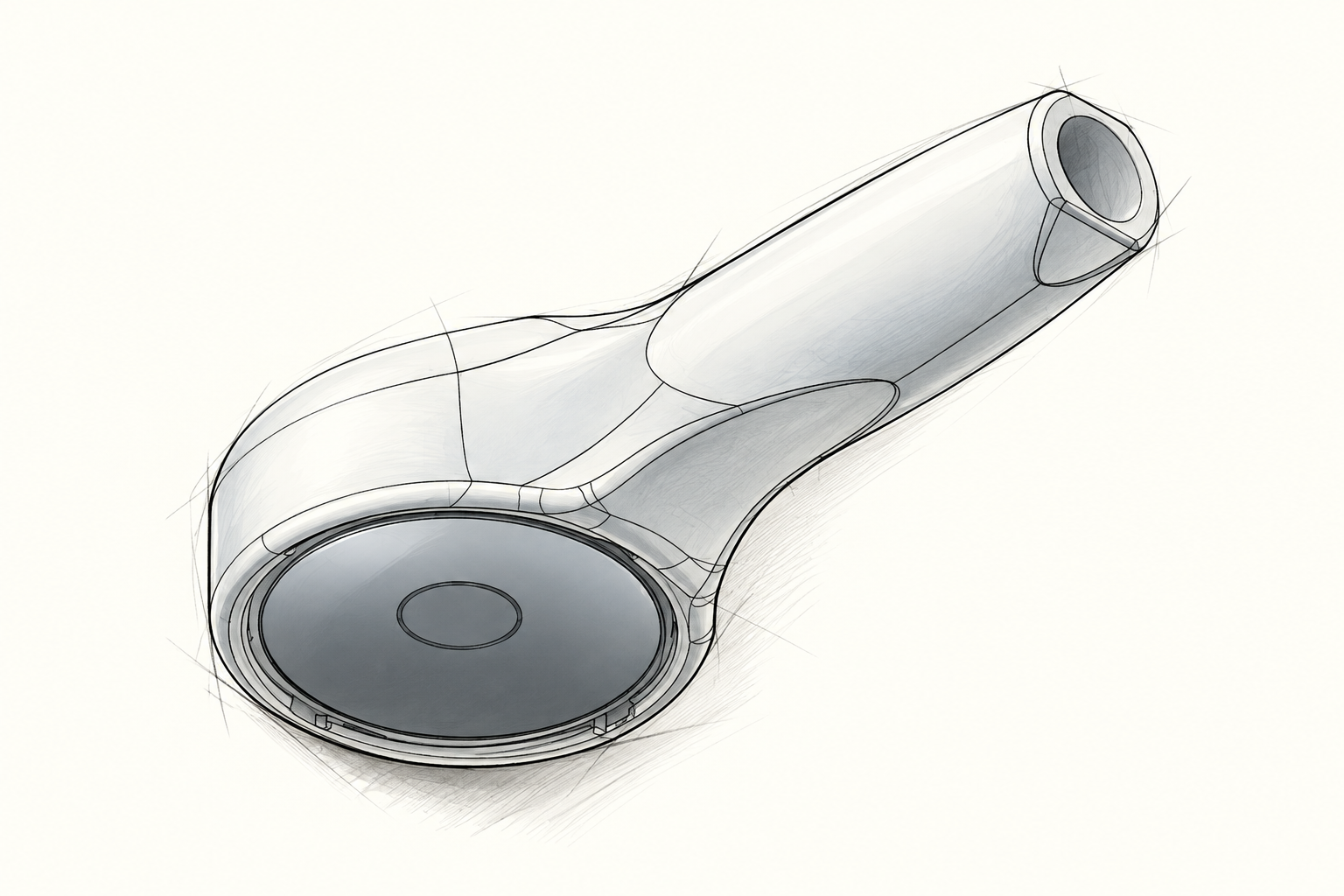
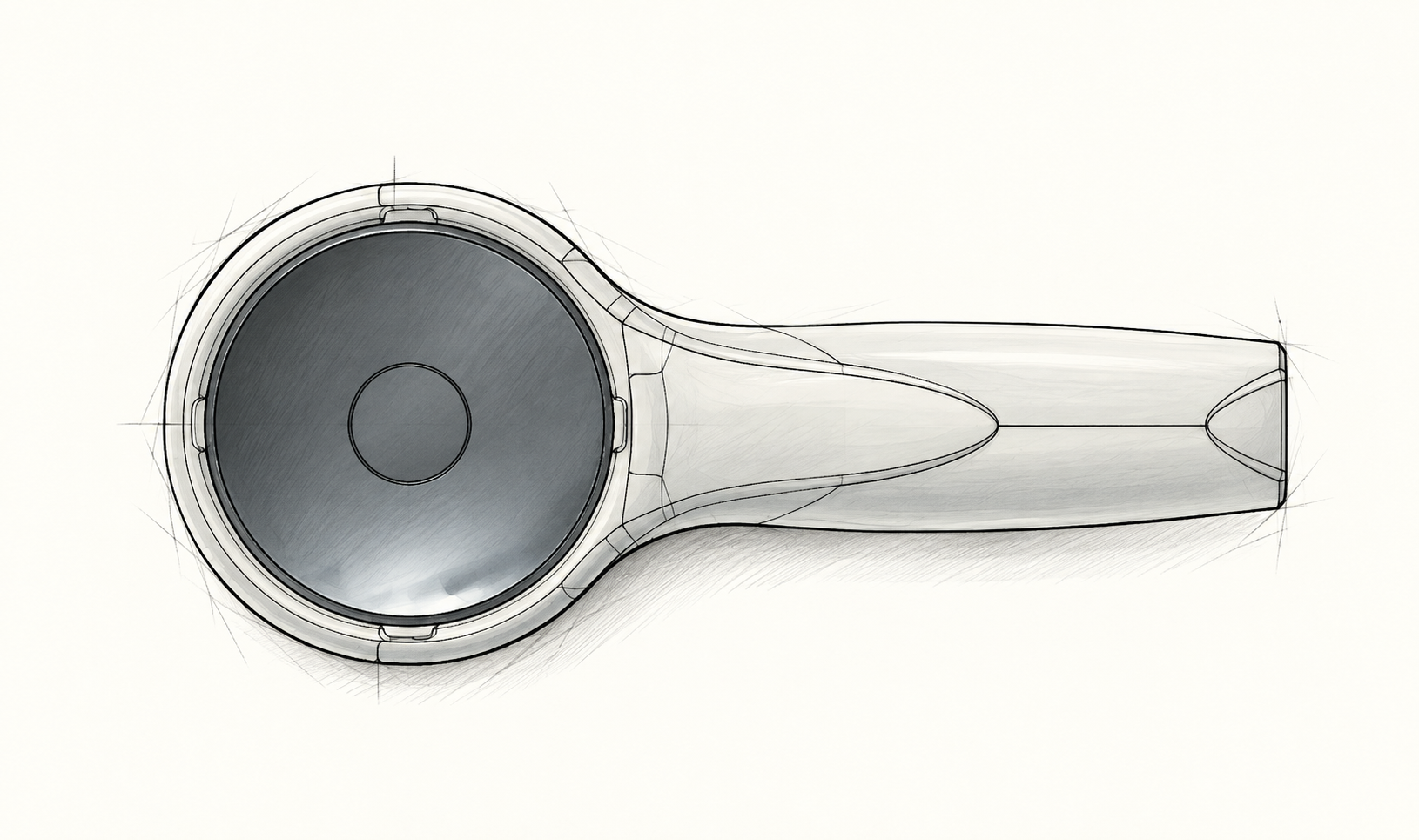
The original design of this coil was too geometric for my taste. With its round head and straight handle, it looked like a lollipop. I wanted to give it a stronger, more biological form.
The challenge was to create bold, sculpted edges without taking it too far into a gaming aesthetic. I worked on the contours of the head and the way they flow into the handle. This is the result.
Rat stimulation device
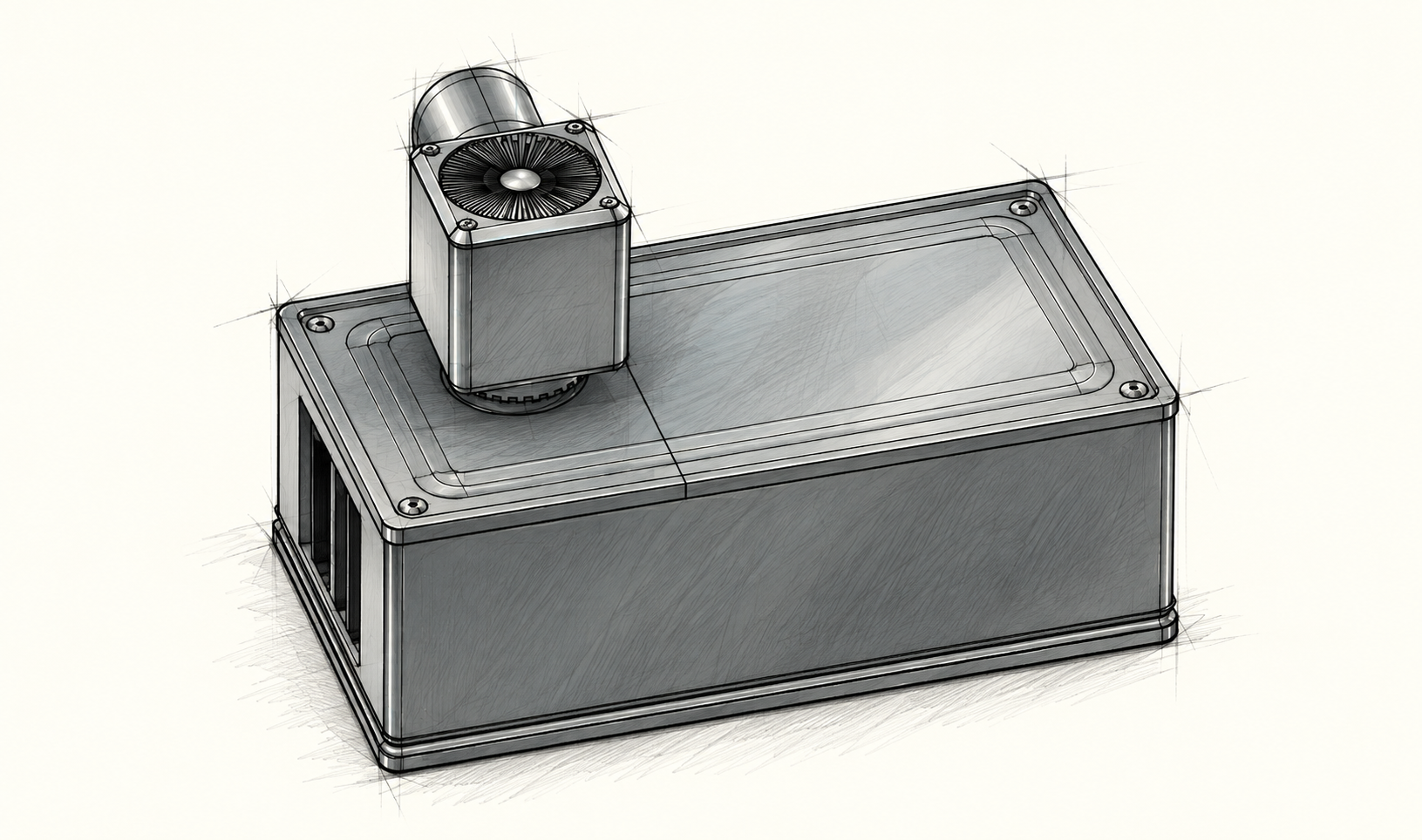
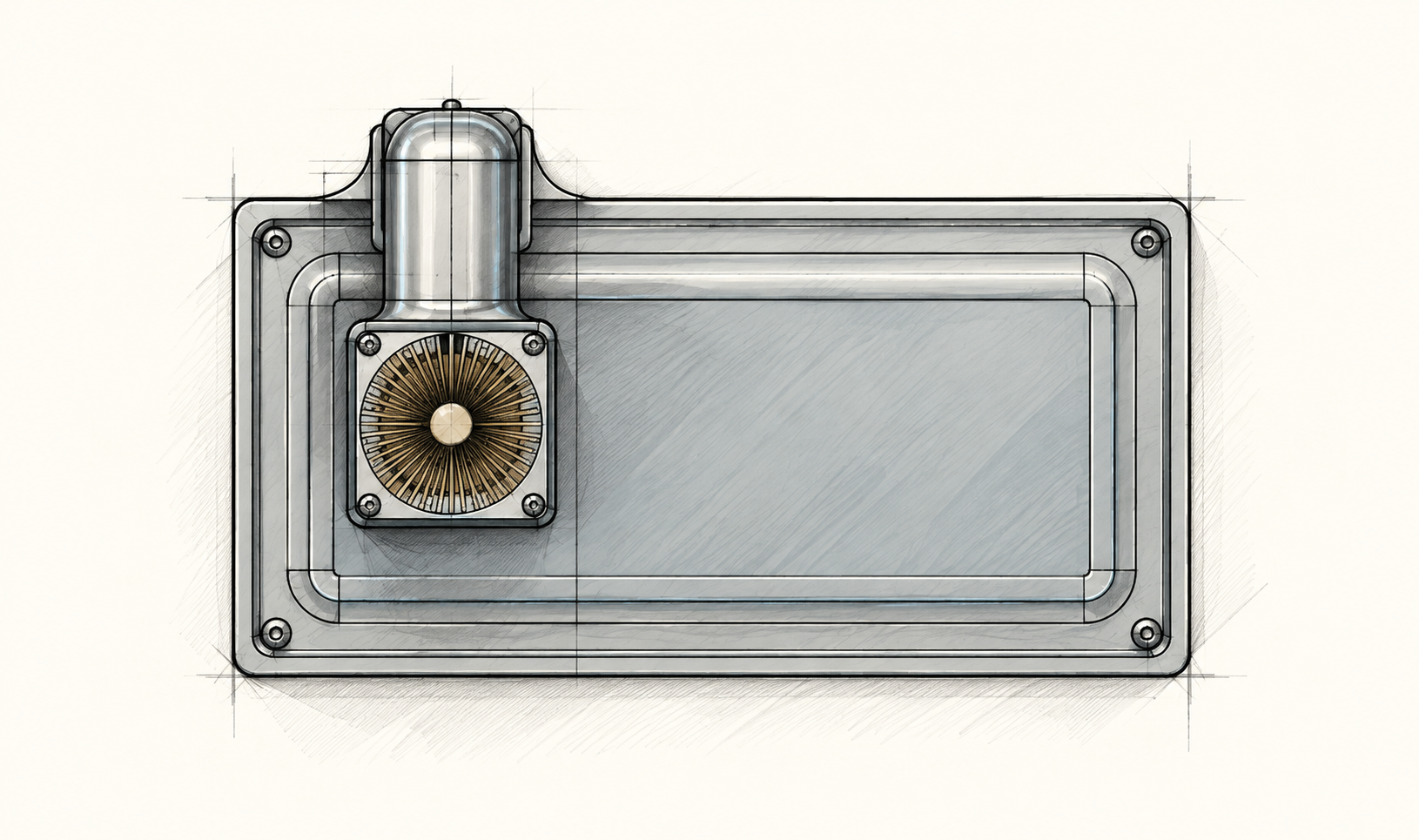
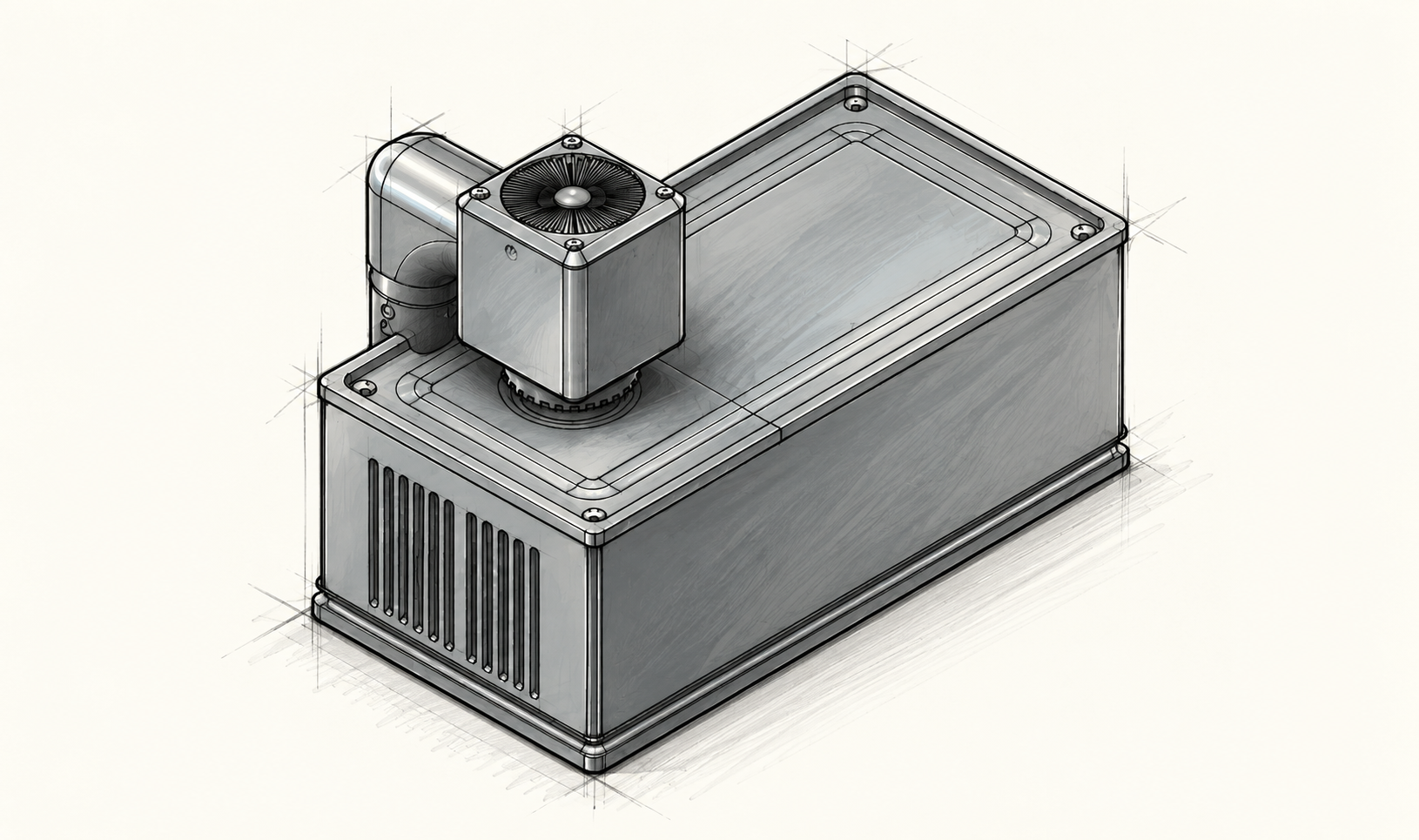
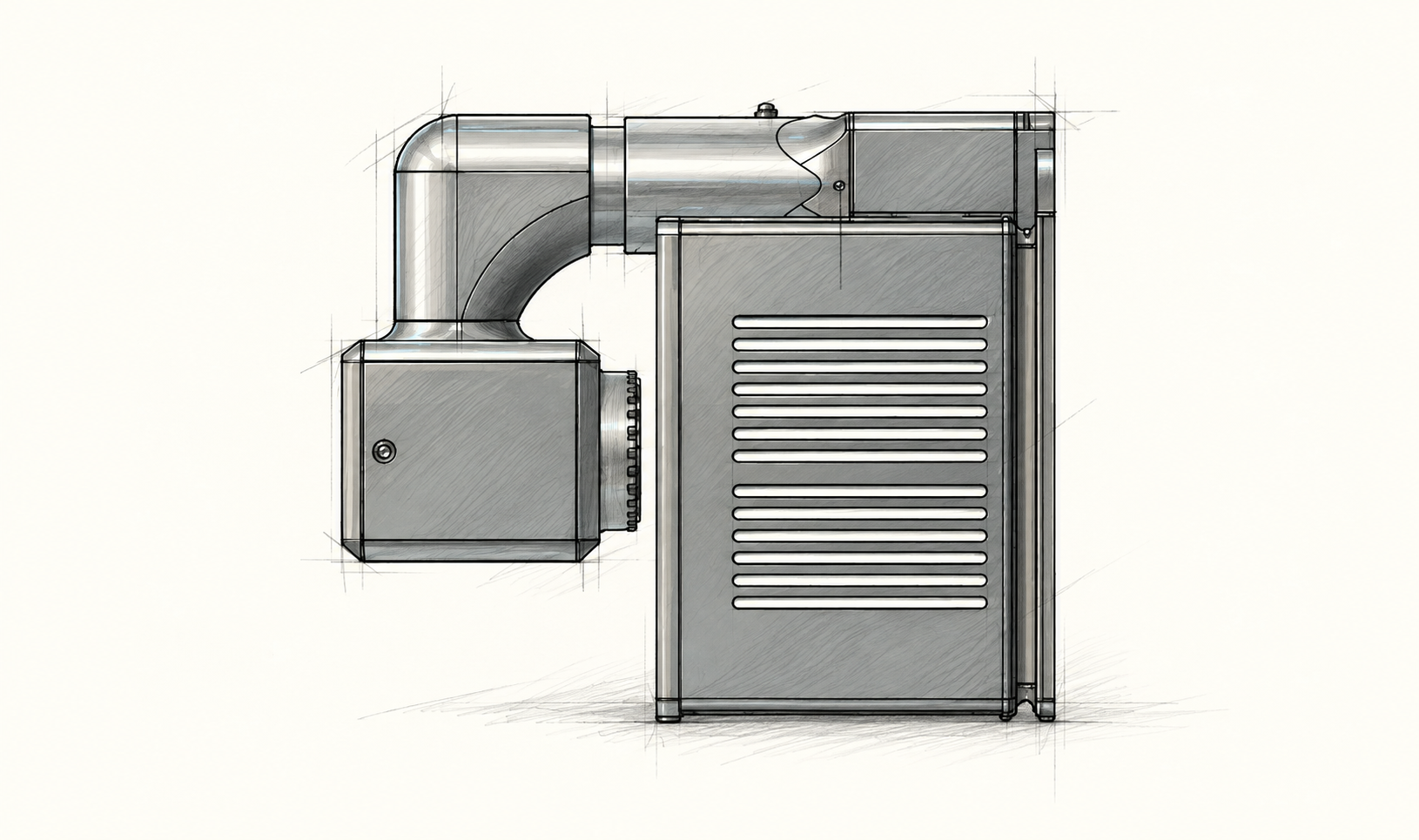
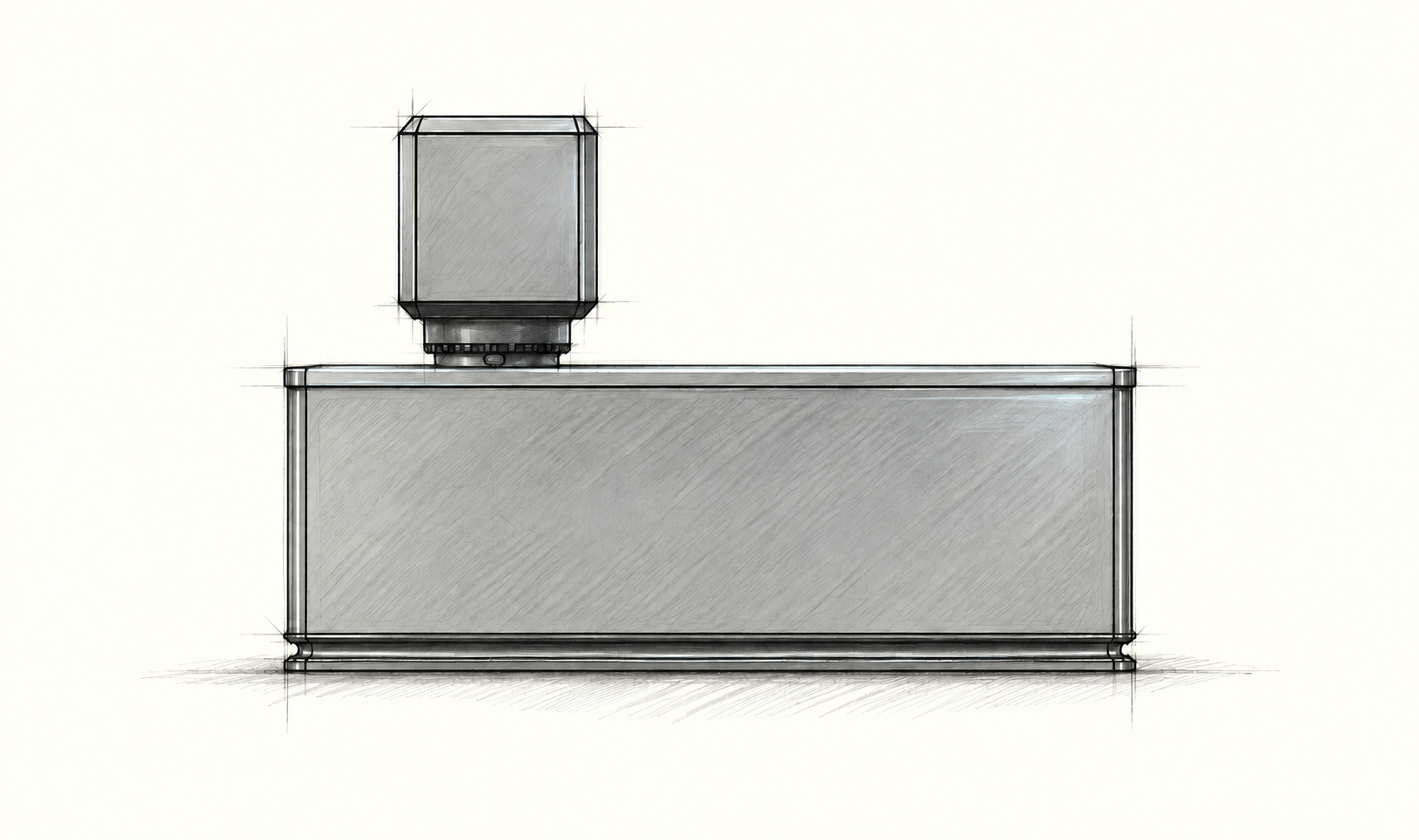
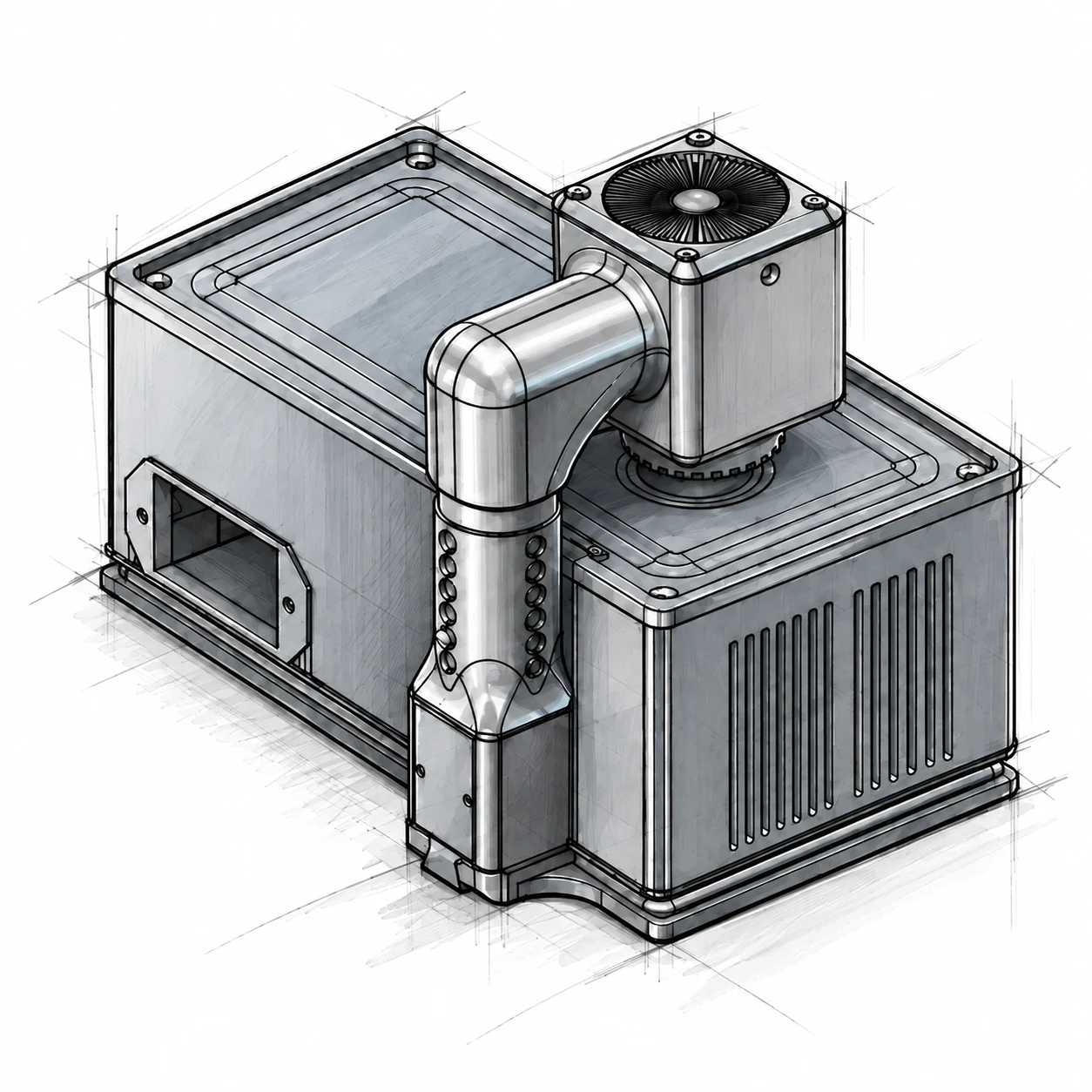
These devices needed to travel to France for research studies, so functionality and transportability drove the design. Part of the challenge was to make them easy to stack, so several units could be packed and transported together.
The lower enclosure holds the electronics, ventilation, and power supplies. The coil extends above it on an arch, with a mechanism I designed to adjust its position. The coil can be removed for transport, leaving a rectangular prism that is easy to stack and move between labs.
Faceted EEG headset
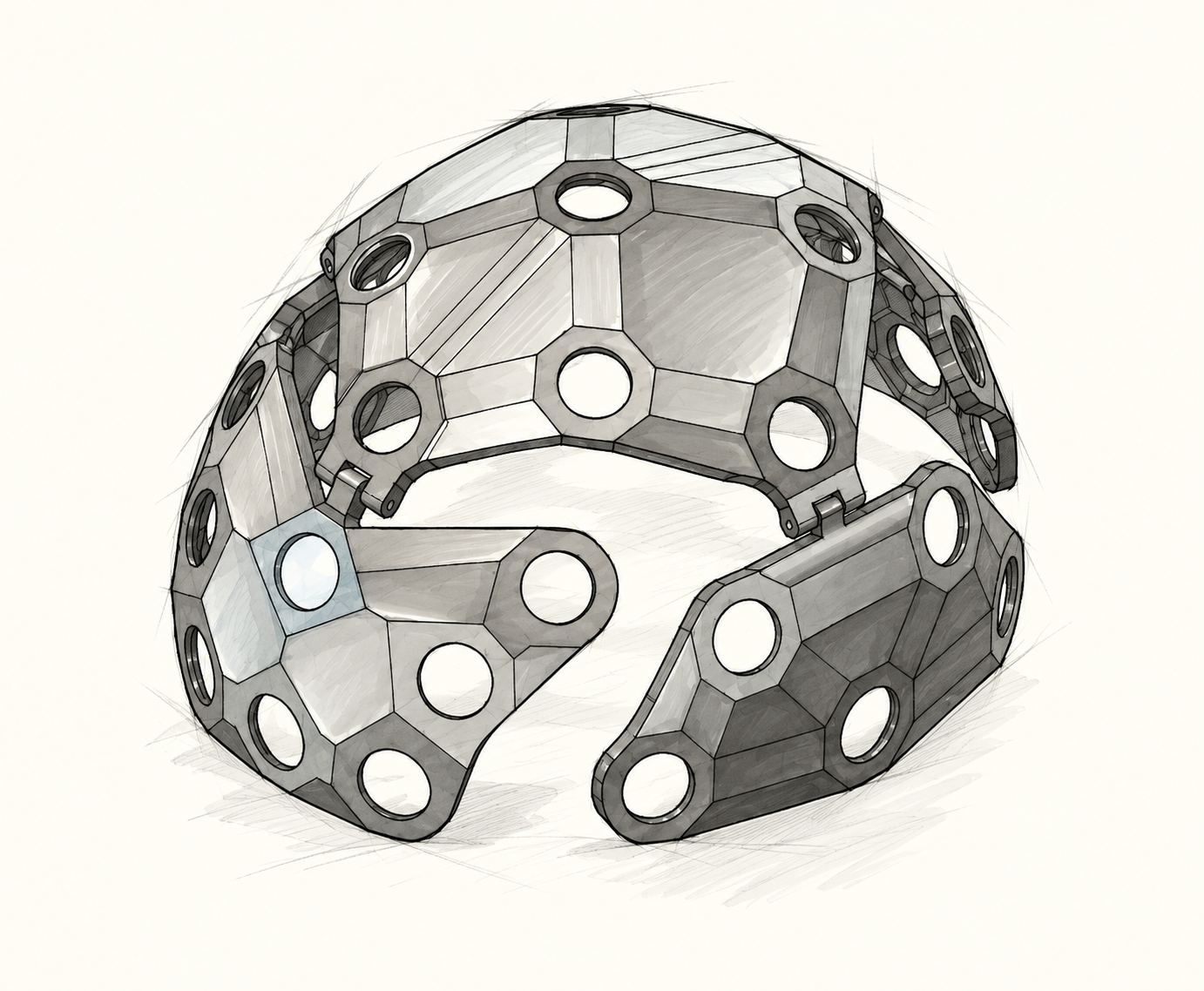
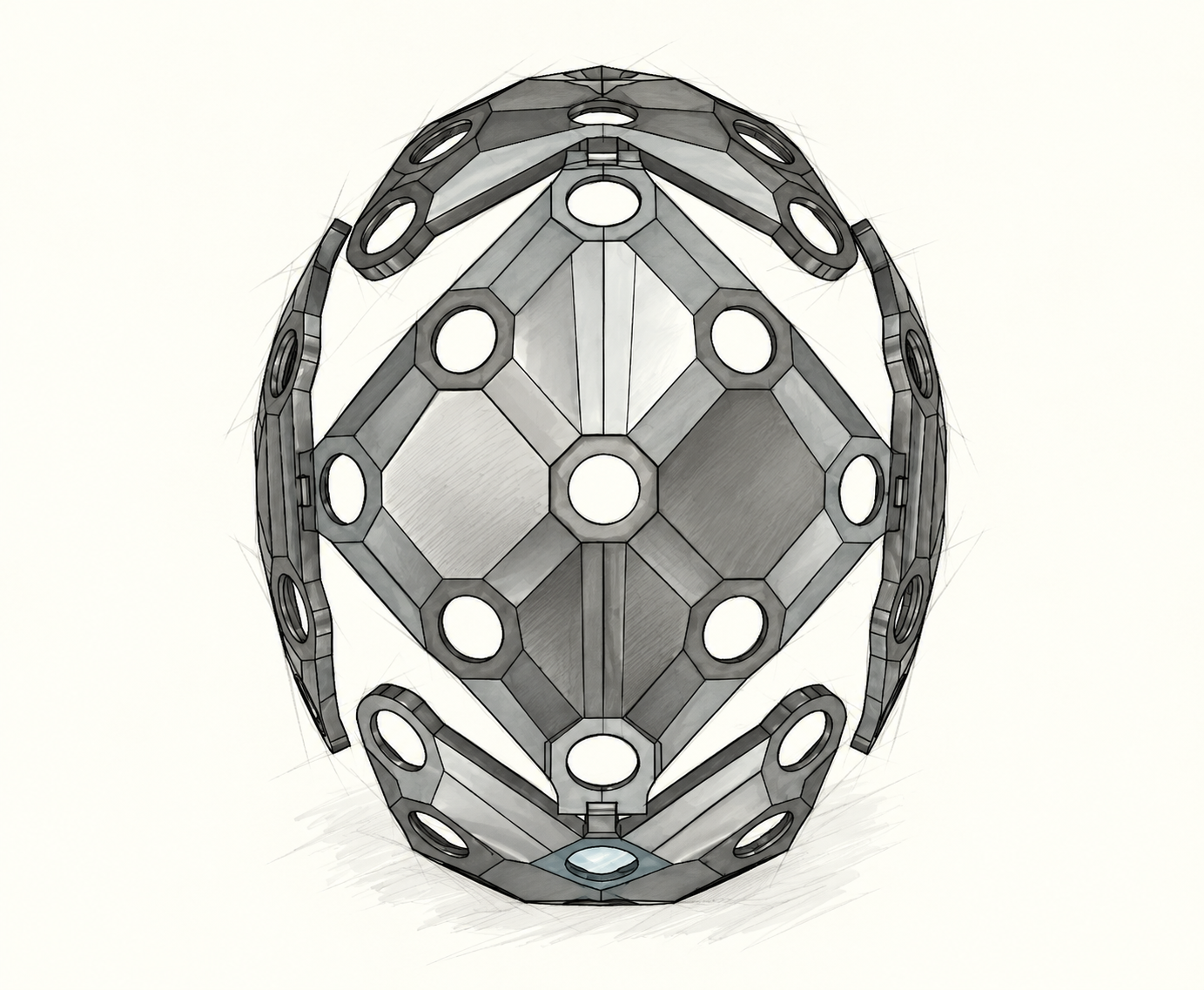
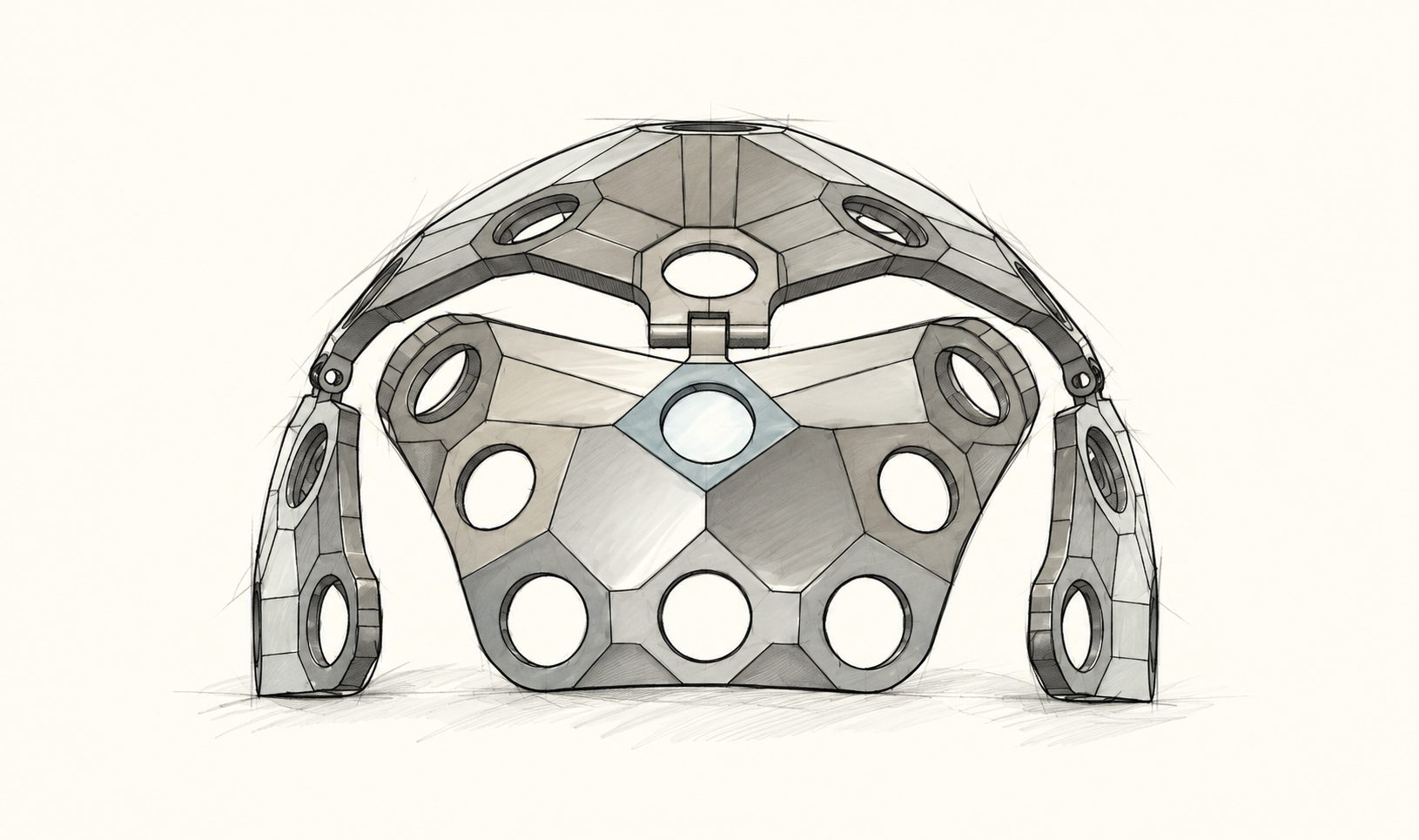
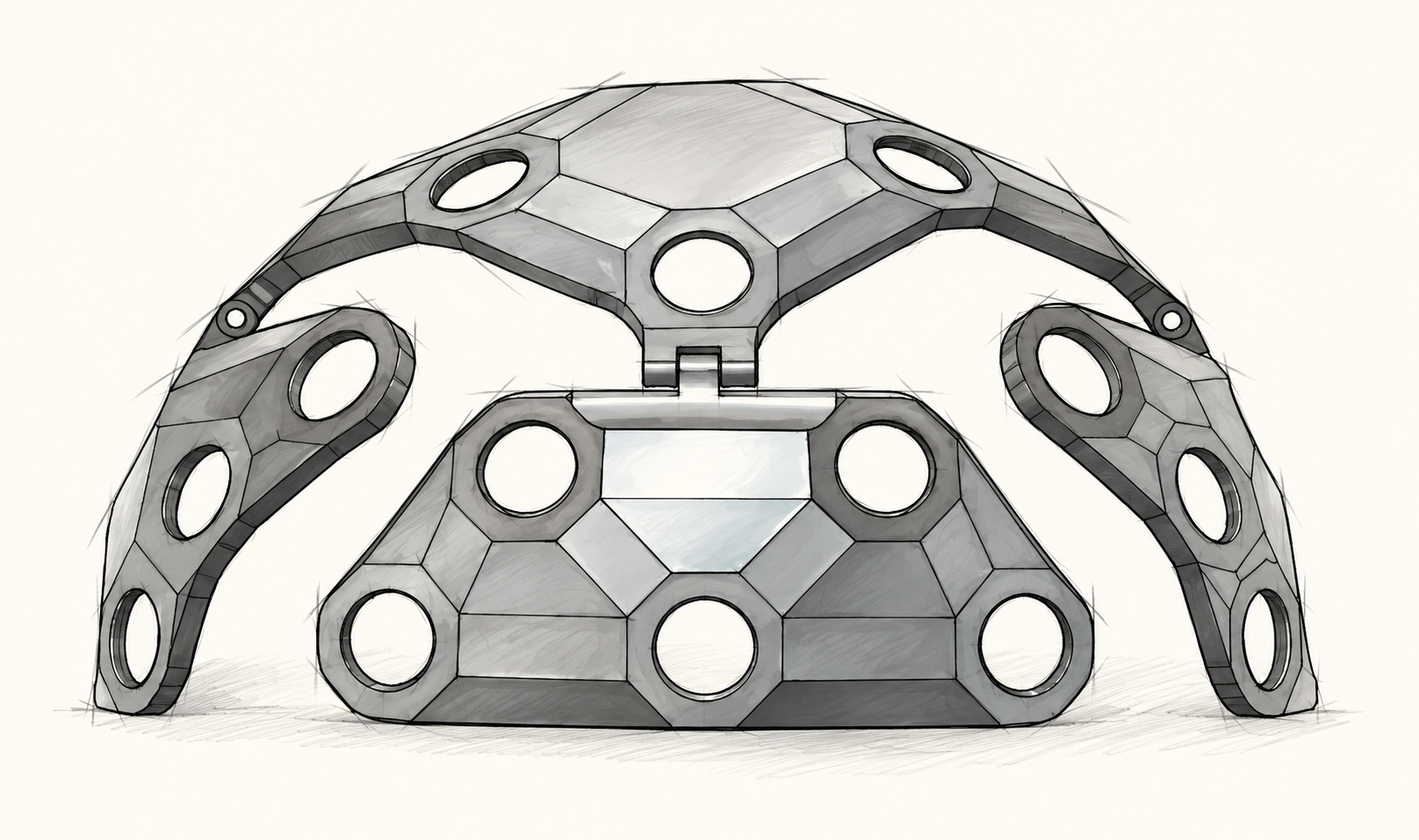
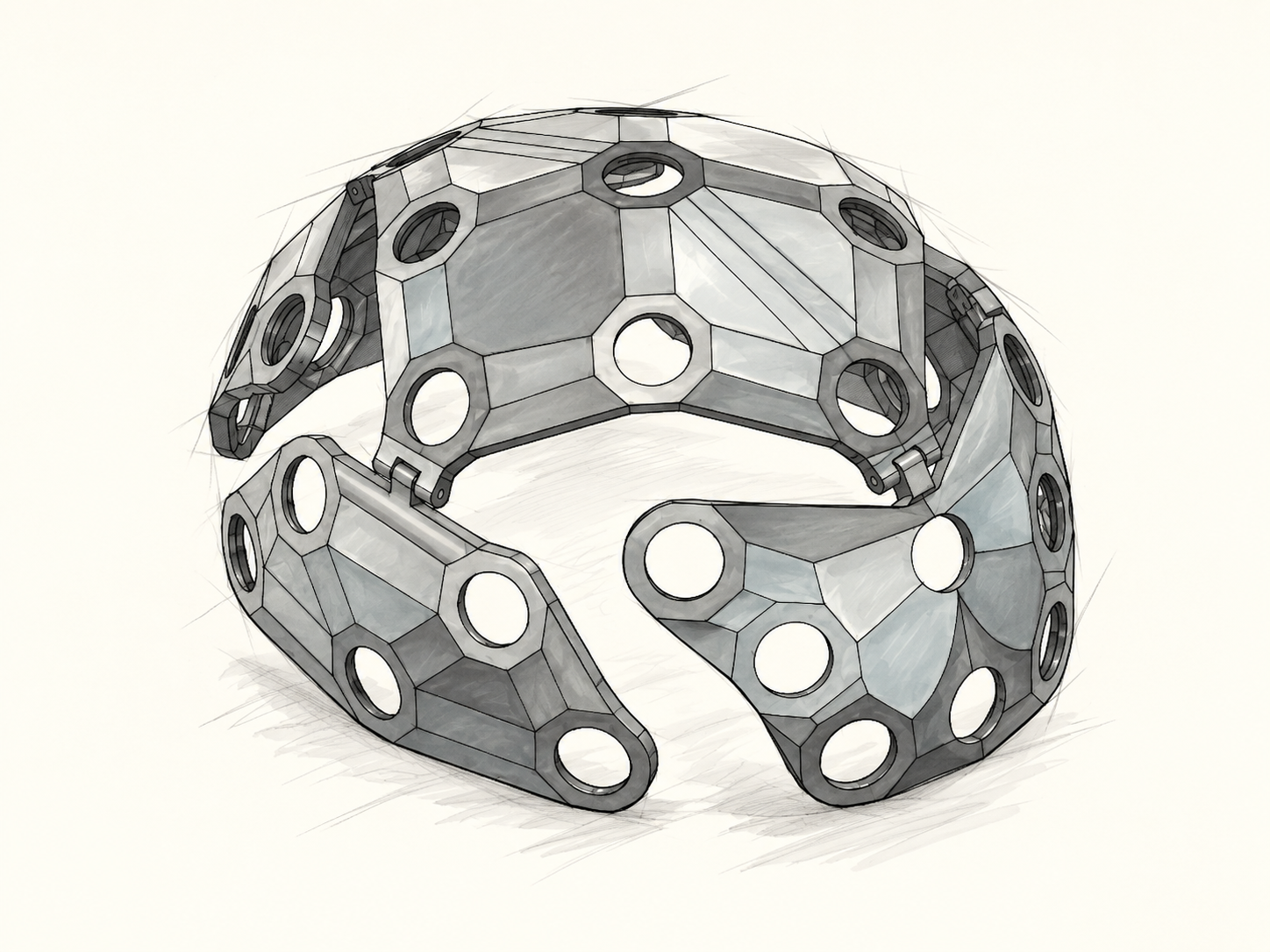
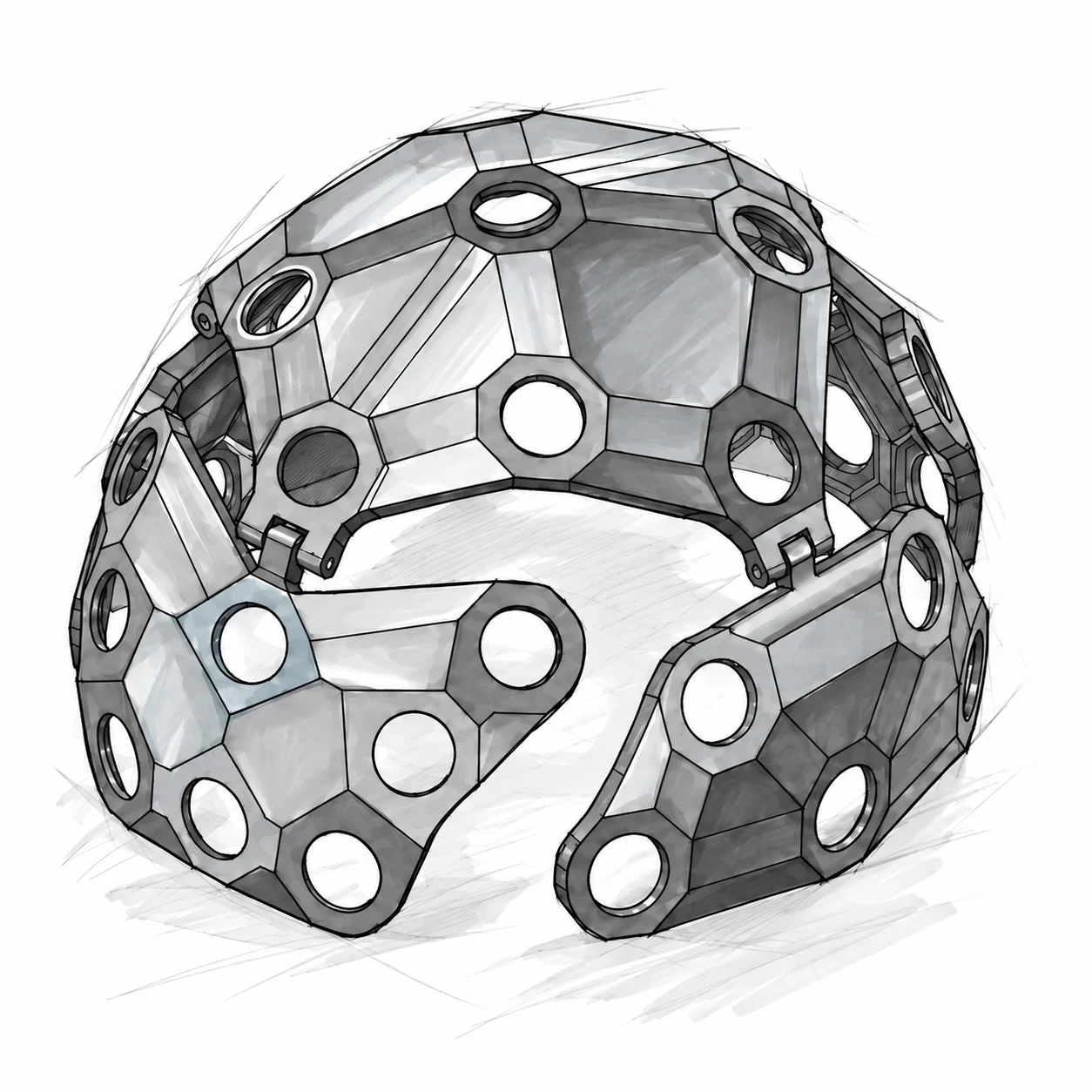
Both of my EEG headset studies start from OpenBCI’s publicly available headset design. I wanted to explore a more organic appearance, and this first iteration uses several sections that can move on hinges.
The faceted panels and circular openings give the shell its structure, while the joints introduce movement between parts. It was one approach to bringing a more biological form to the headset while retaining a clearly articulated assembly.
Adapted from OpenBCI’s publicly available headset design.
Lattice EEG headset
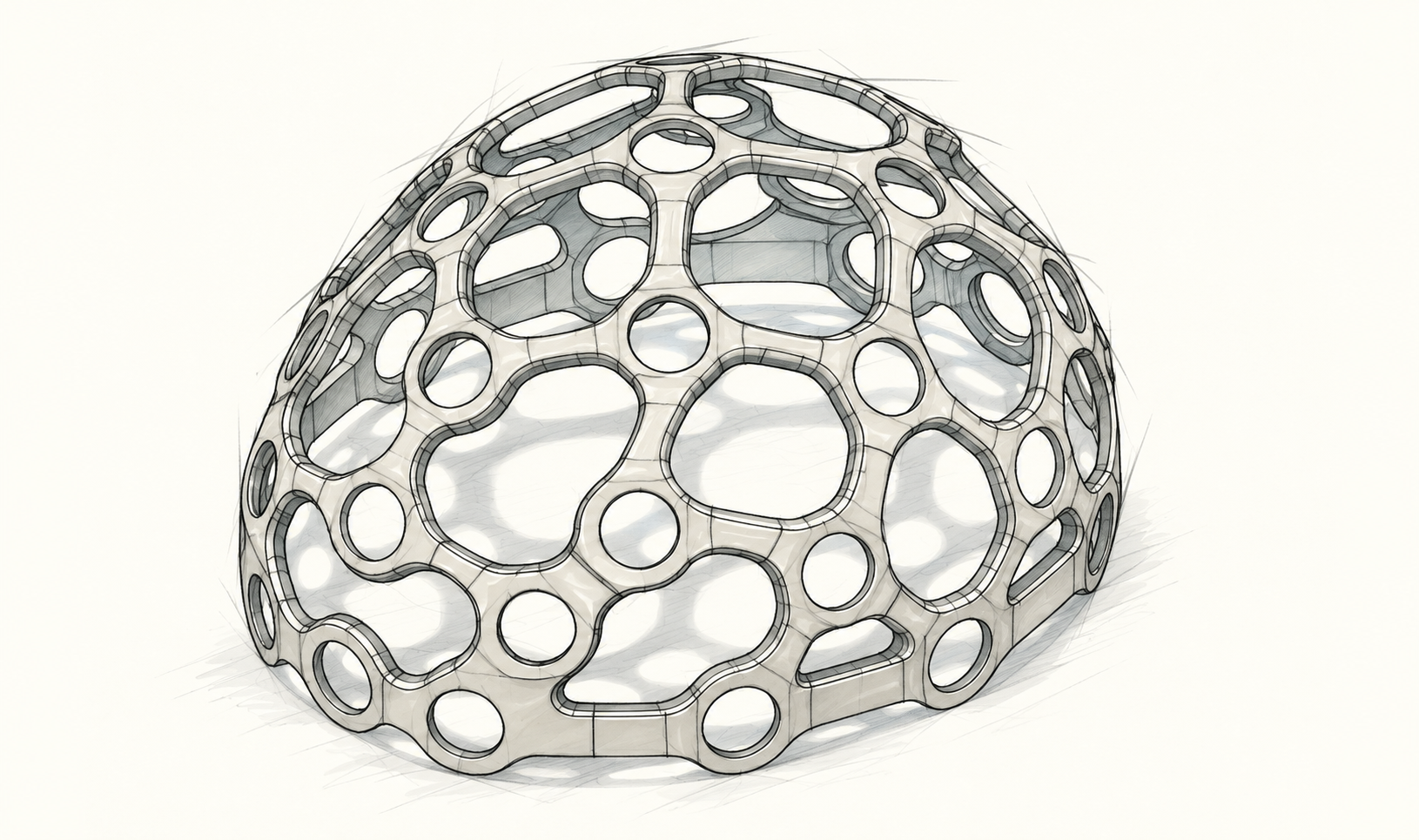
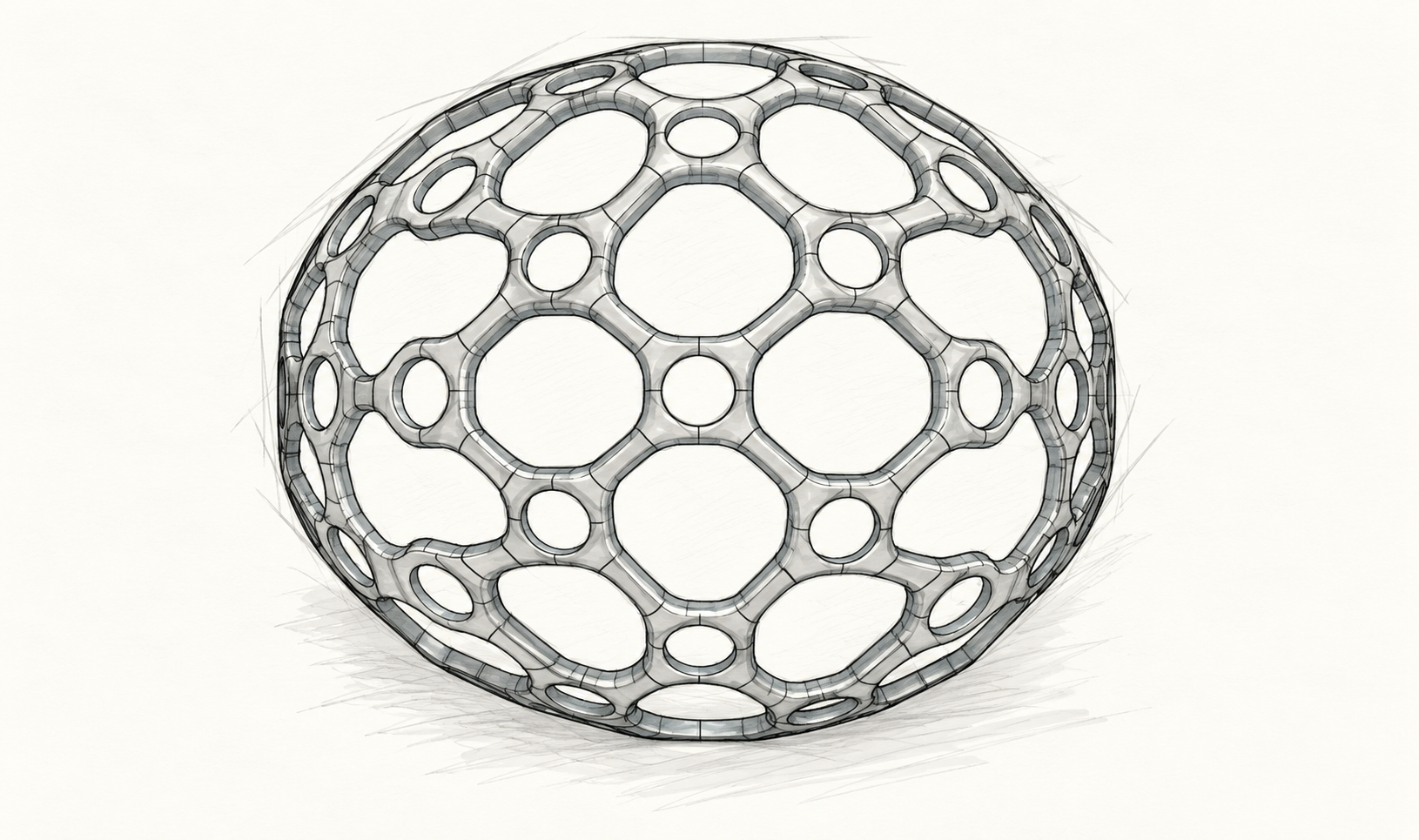
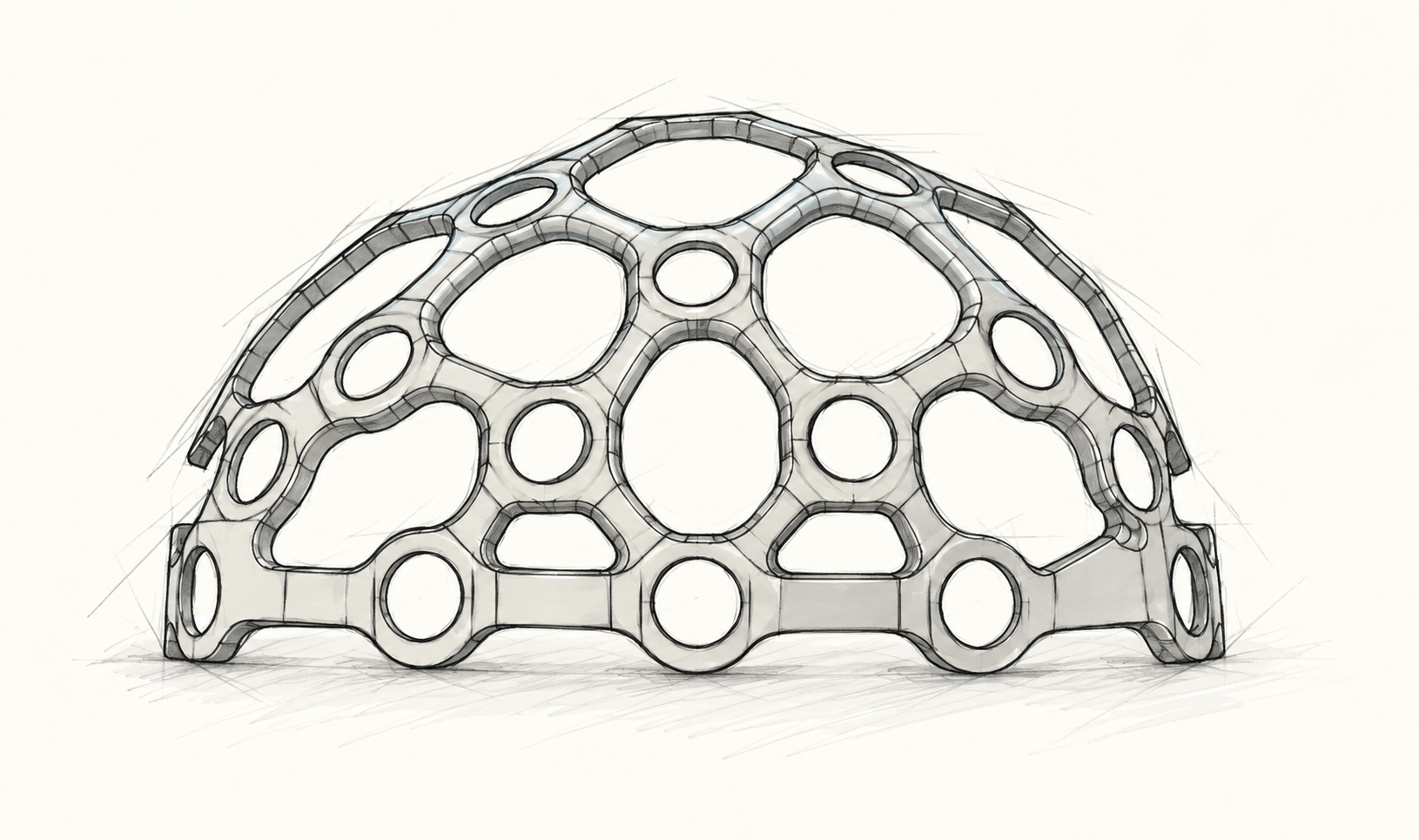
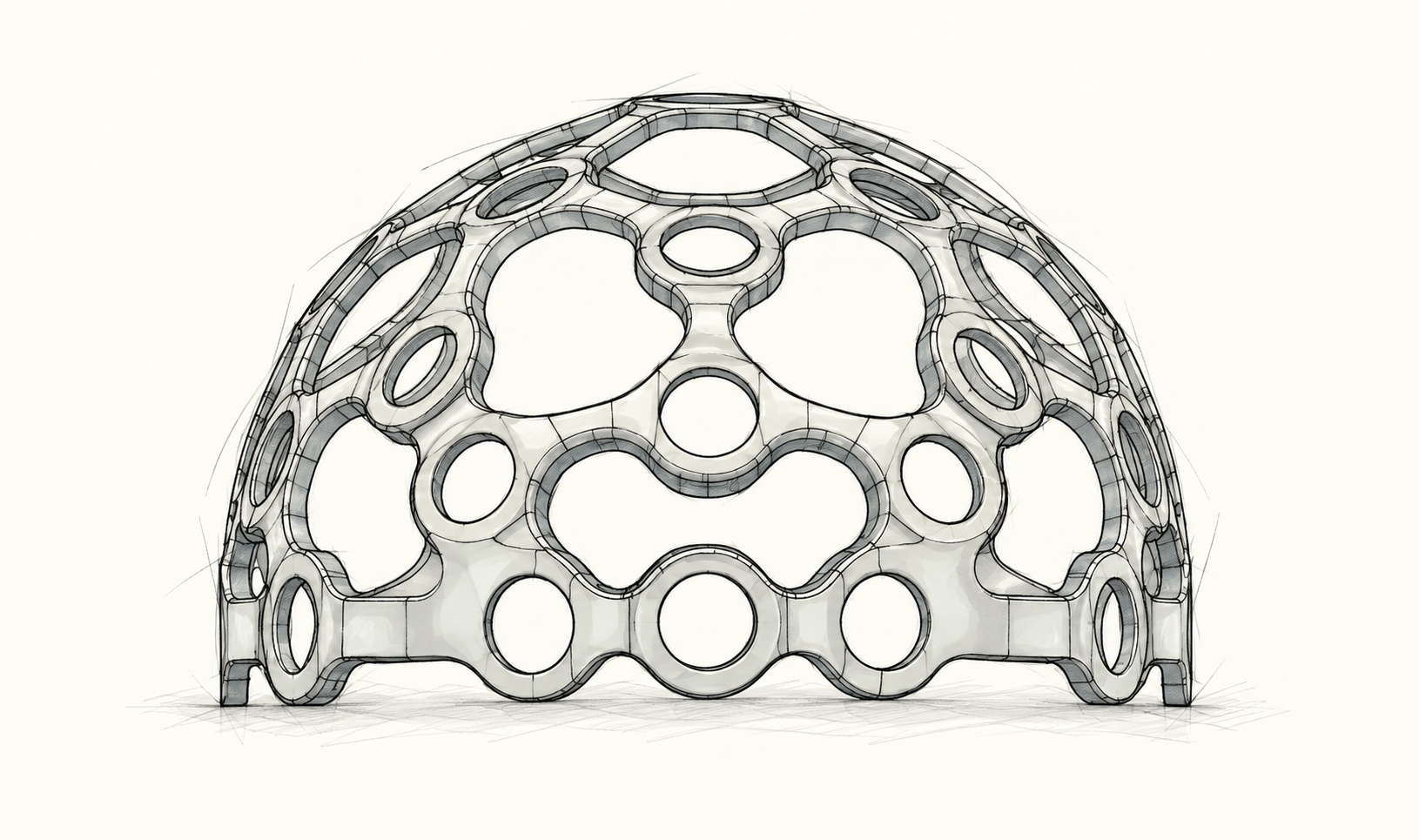
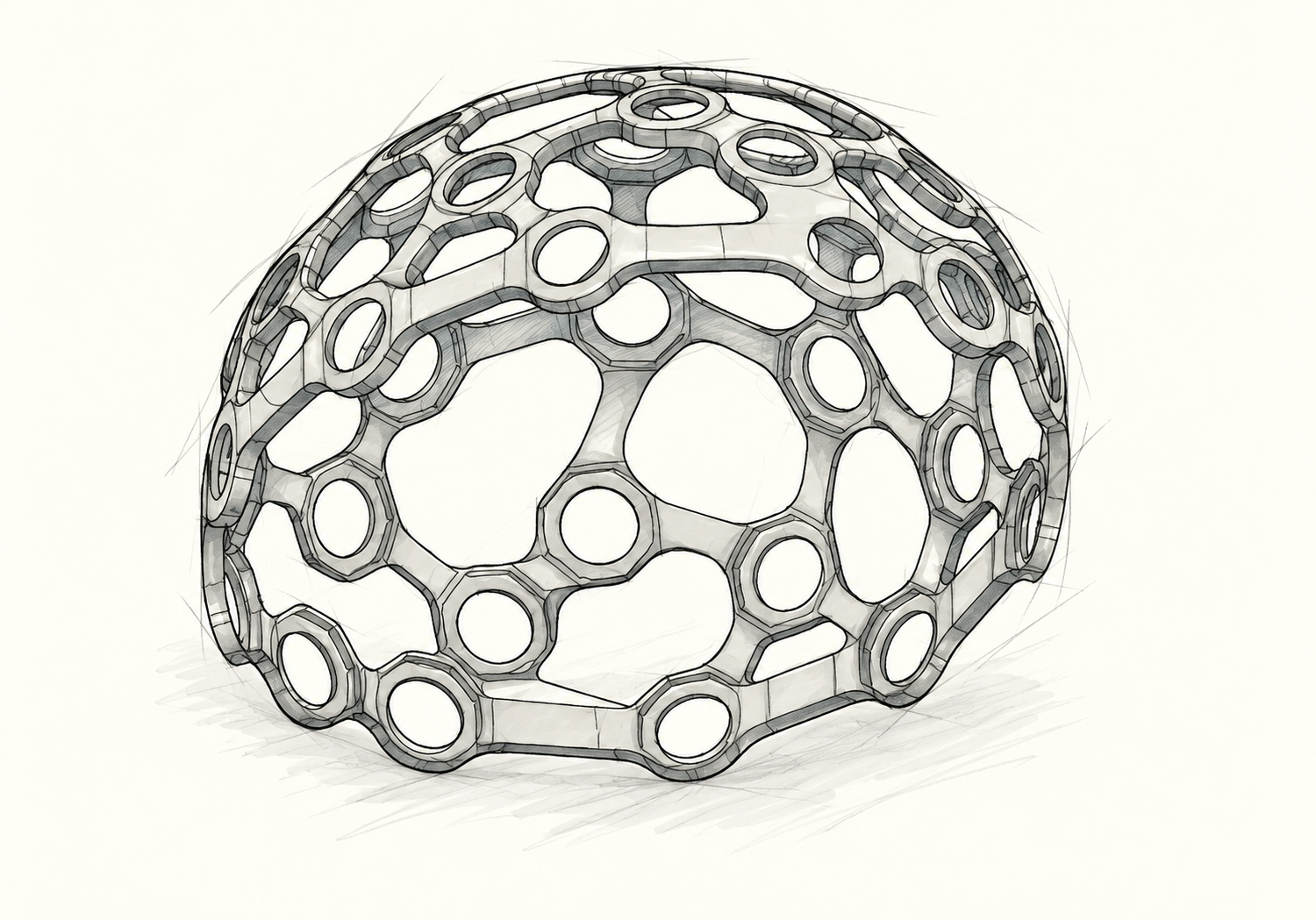
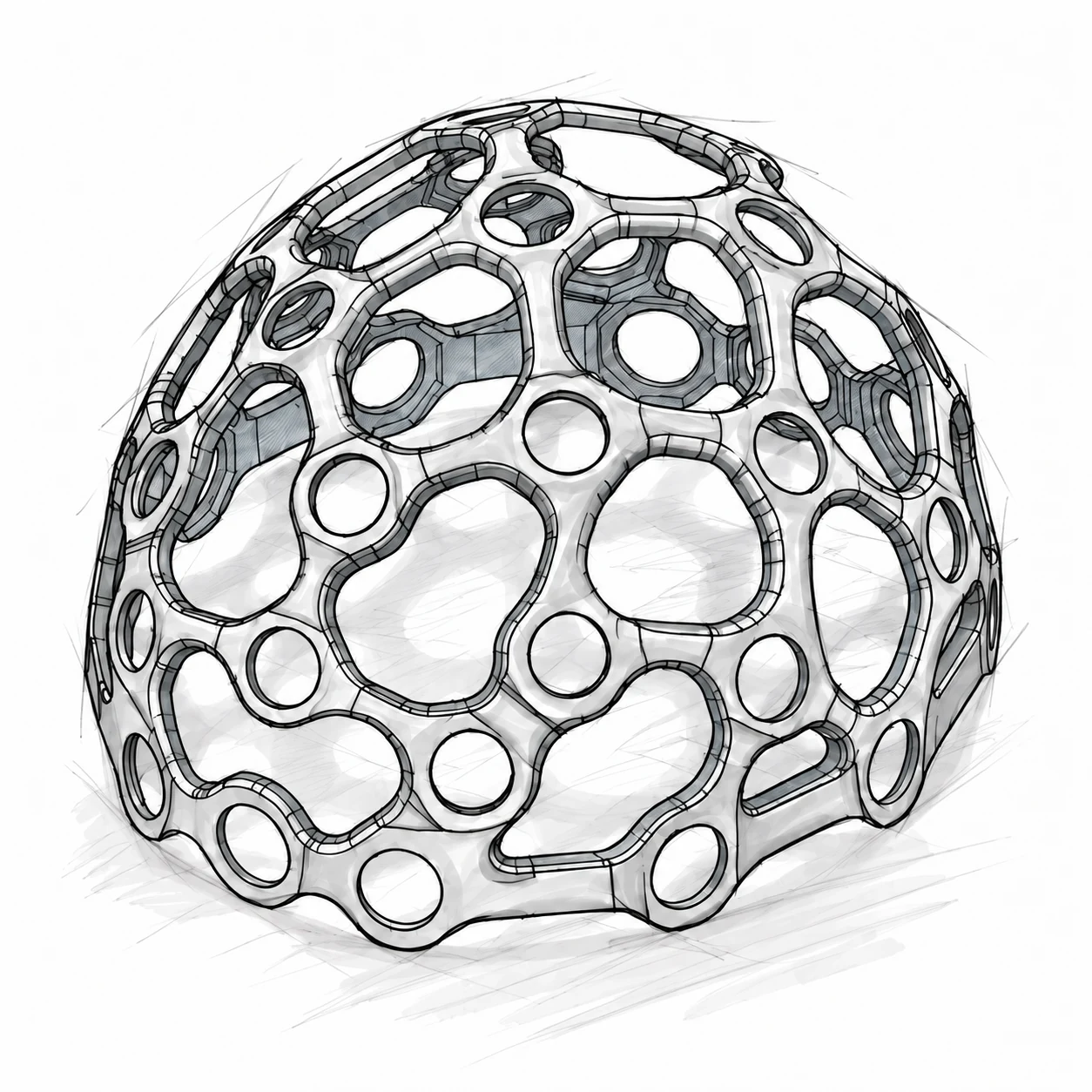
My second study based on OpenBCI’s publicly available headset takes a different approach: a continuous structure without the moving hinges of the first version, with more organic curves connecting the circular mounts.
The framework is rigid in its assembly, but I shaped its curves to allow more flexibility in the structure itself. Large openings and flowing ribs define the dome. It explores how some flexibility can come from the geometry, instead of separate moving joints.
Adapted from OpenBCI’s publicly available headset design; flexibility is a design aim.
NHP coil prototype
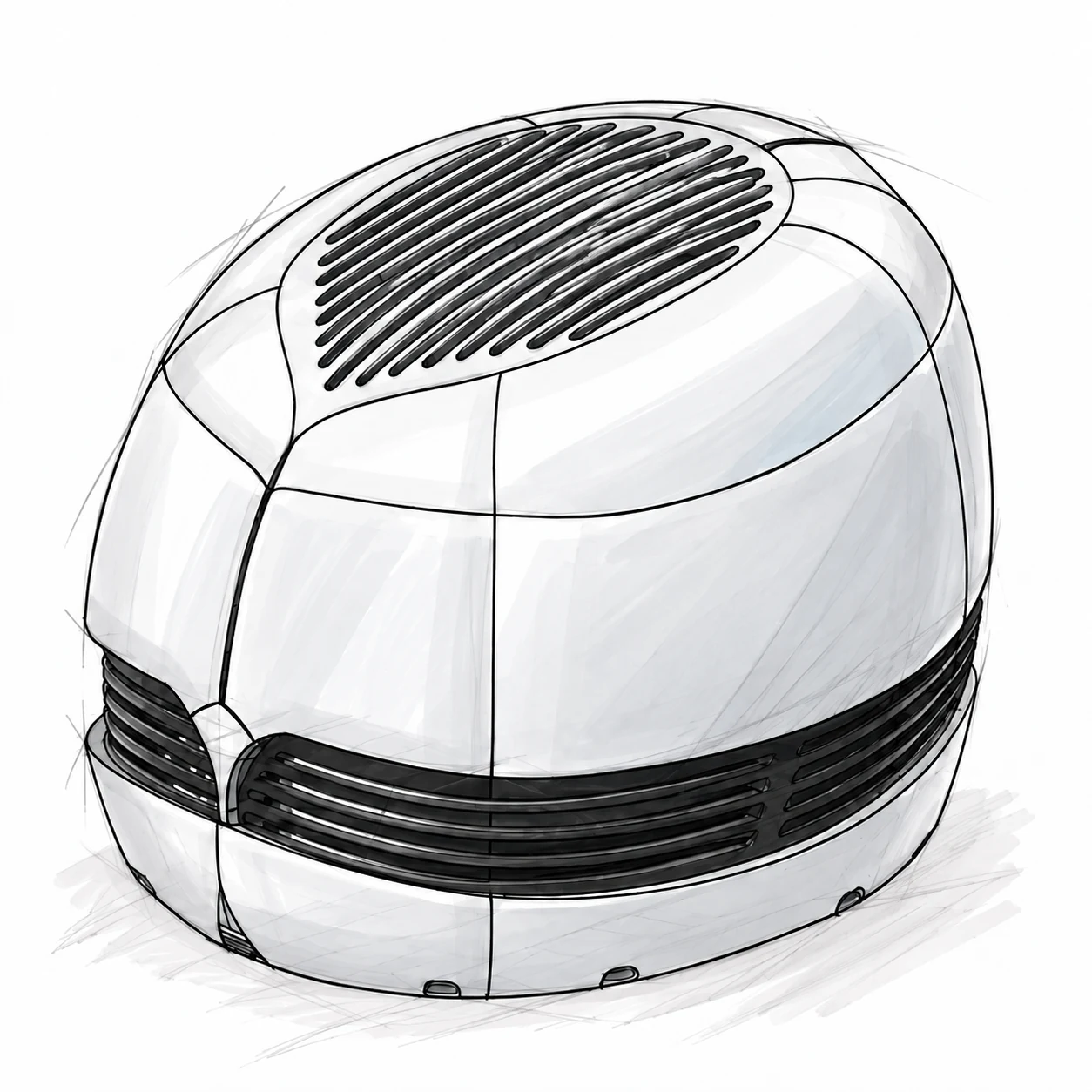
A large, rigid coil prototype for non-human primates, used in a study in France. The design needed room for the entire head, space to conceal the electronics, and substantial ventilation. Those requirements explain its size.
The starting point was the hooded hair dryer of the 1970s and 1980s. I borrowed its full-head shape and gave it a simpler, more modern form. The rounded shell hides the components, while the top vents and lower vent band address the need for cooling.
Drawing the senses
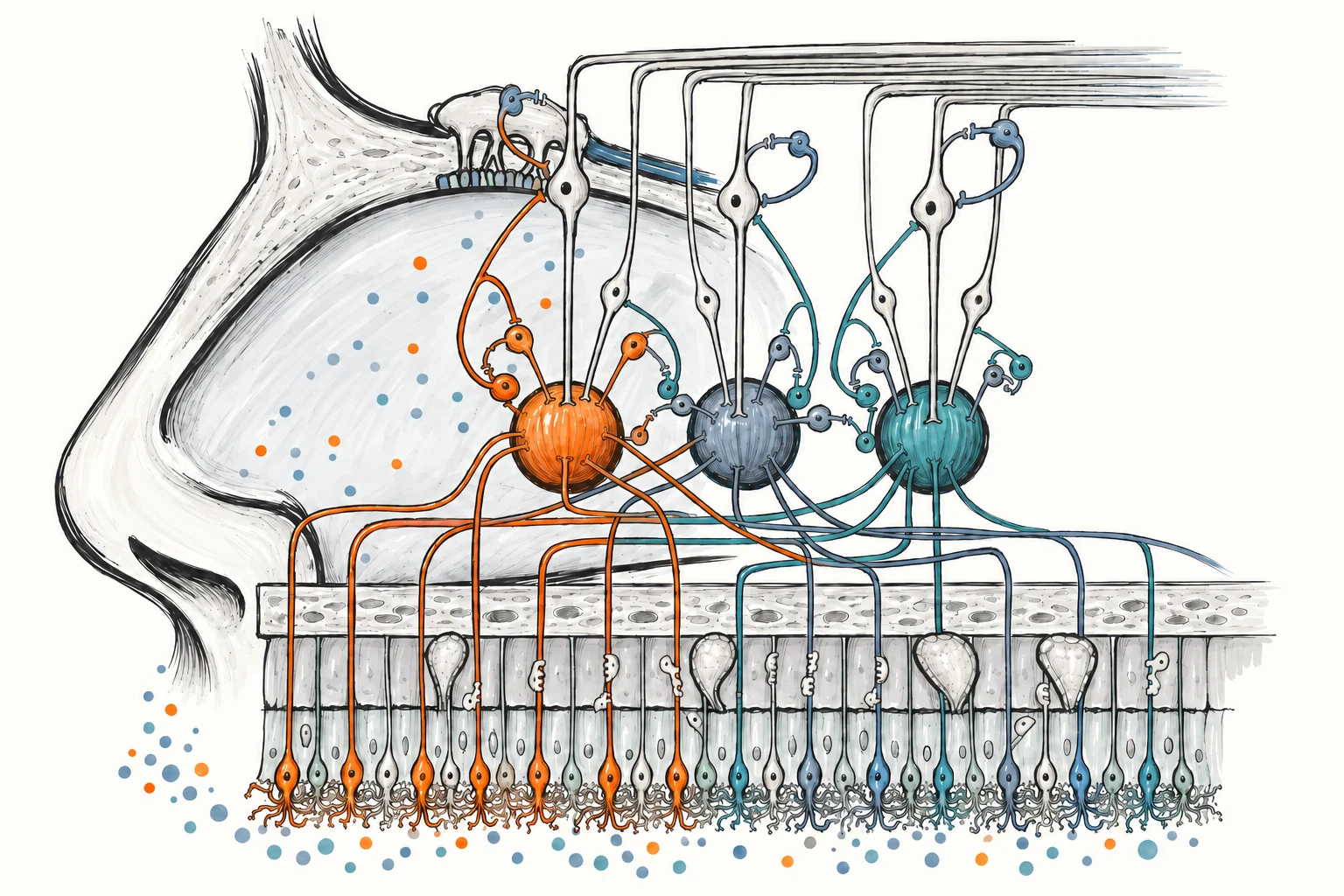
During my PhD thesis, I wanted to explain the cellular architecture of the olfactory bulb. I couldn’t find an image that showed what I wanted to communicate, so I decided to draw it myself.
I brought the layers, cell types, and their connections into a single view to make their relationships easier to follow. The illustration grew out of my research on conscious olfactory perception.
Use the Previous and Next buttons, or the Left and Right Arrow keys, to browse designs.
Good work starts
with a conversation.
Have a research question, a project in mind, or an idea worth exploring together?