Projects.

The questions, the process,
and the things taking shape.

01

Apertum · Phase I in glioblastoma

What if more of a cancer drug could reach the brain?

Glioblastoma is a devastating, aggressive brain cancer. Even with surgery, radiation, and chemotherapy, it remains extraordinarily difficult to treat. Drug delivery is one major obstacle: the blood–brain barrier limits how much of many anticancer drugs can reach the brain.

We are working on a Phase I study of Apertum in glioblastoma, motivated by the potential to increase chemotherapy exposure in the brain. Getting more treatment where it is needed could open new possibilities. This early study starts with safety and feasibility; whether improved delivery leads to better outcomes remains a question for clinical research.

Background reading
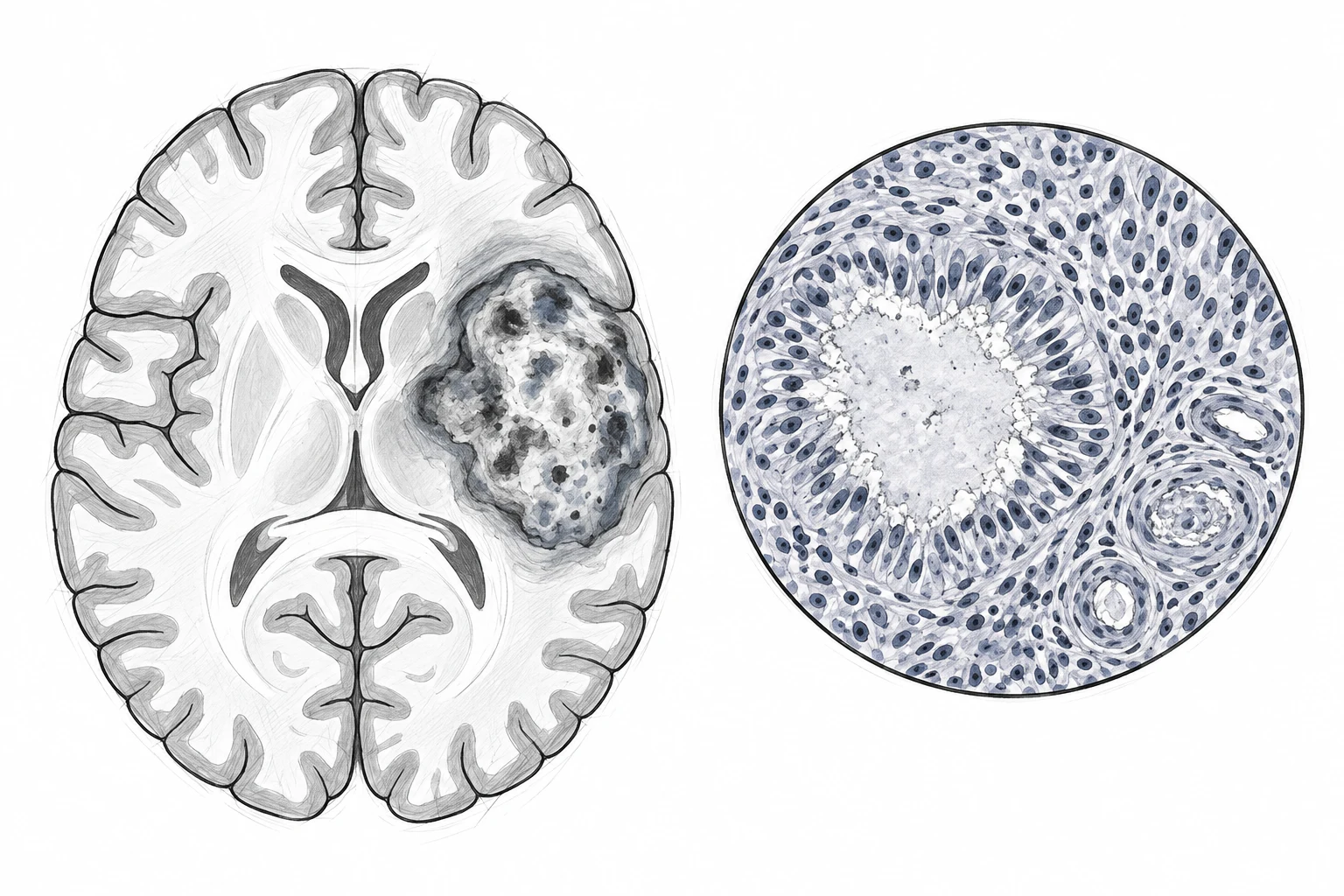
Illustrative ink-and-marker brain section with a focal glioblastoma lesion and a circular microscopic tissue detail.

02

Mayna

What if an AI agent could work with the whole patient story?

The wow moment with coding agents comes when they can work with the context of an entire project. I want to bring that feeling to medicine. Mayna is an AI workspace built around the patient's evolving story: previous visits, test results, treatments, and the question in front of us today.

The magic is in the context: connecting a new finding to what came before, finding the detail that matters, and helping the physician move from information to the next useful step. The goal is an agent that can work alongside us with continuity, while we review its work and make the clinical decisions.

In development

Ink-and-marker illustration of a laptop with an abstract clinical workspace, a notebook, and a stethoscope.

03

Low-intensity TMS & irritable bowel syndrome

Could working through the brain help relieve symptoms in the gut?

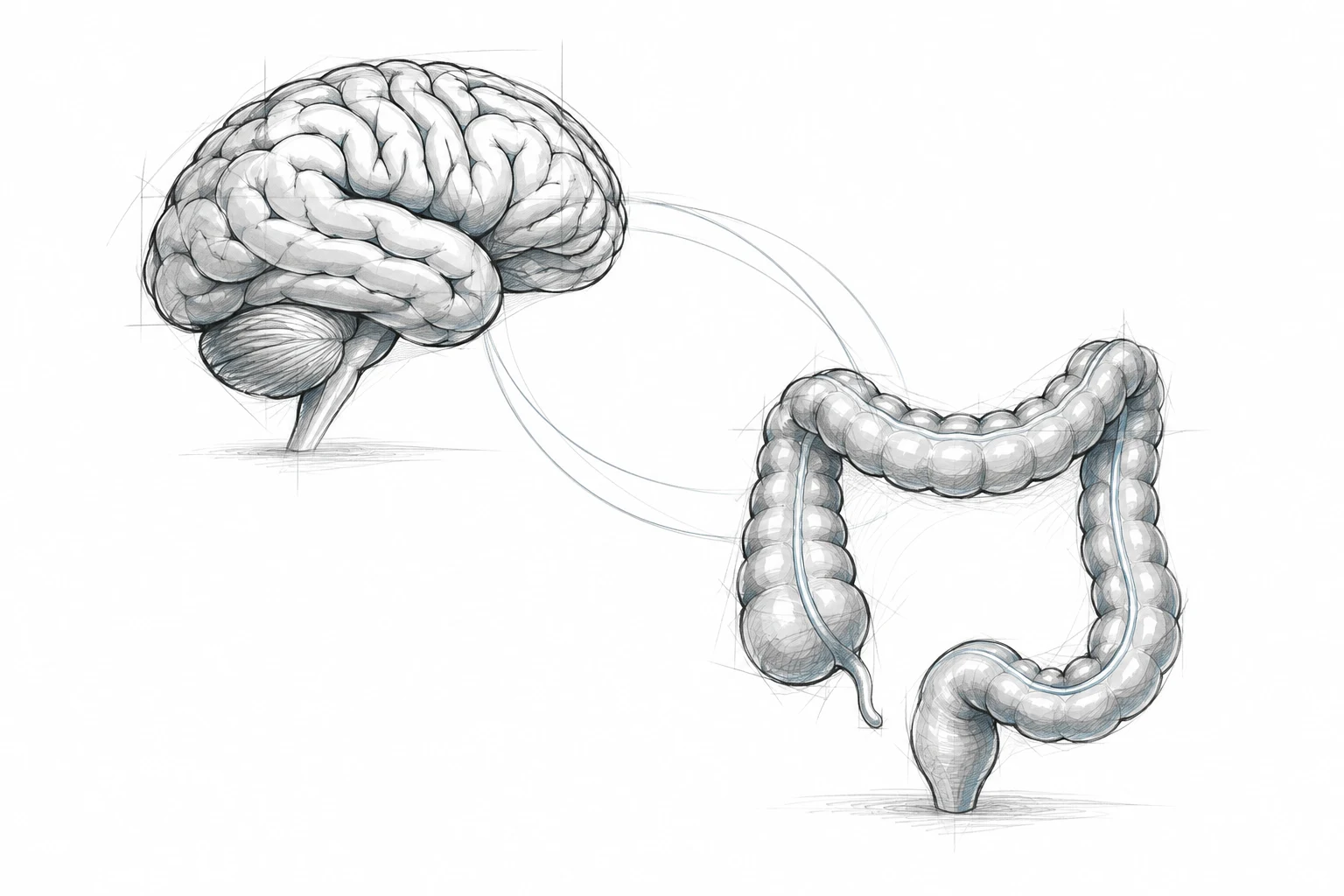
Irritable bowel syndrome involves the conversation between the gut and the brain. Pain, bowel symptoms, stress, and anxiety can be closely connected. Existing treatments already work with this relationship: some antidepressants, particularly low-dose tricyclics, are used to help manage abdominal pain, alongside dietary and other approaches.

That connection motivates our pilot study of low-intensity transcranial magnetic stimulation. We are exploring whether modulating brain activity could influence gut symptoms through the brain–gut relationship. It is a rationale to test in a pilot, rather than an established treatment effect of our approach.

Background reading
Pencil and gray-marker illustration of a brain and large intestine connected by light curved lines.

04

Reconstructing psychopathology through language

What would the map of mental health look like if we started with people's experiences?

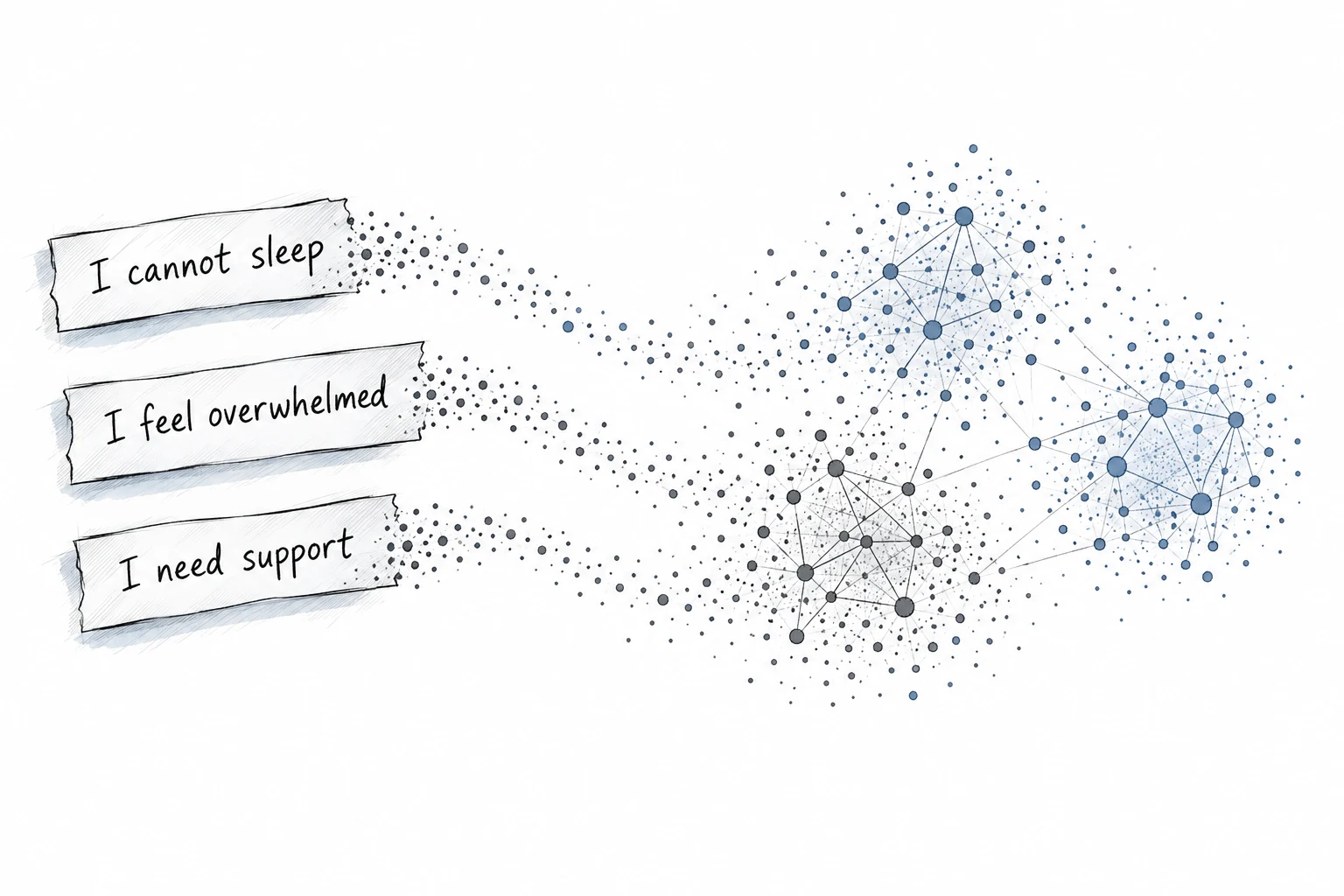
Psychiatric diagnoses give us a shared vocabulary, but experiences often overlap across categories. We are using AI embeddings to ask whether the language people use to describe symptoms, treatment, relationships, and everyday life reveals a reproducible organization of psychopathology.

Starting from individual posts in mental-health communities, we build a hierarchy without feeding diagnostic labels into the clustering. We then examine where it resembles, crosses, or departs from DSM and HiTOP frameworks. The aim is to explore how we describe and organize mental health, not to diagnose the people behind the posts.

Ink-and-marker illustration of the phrases I cannot sleep, I feel overwhelmed, and I need support flowing into clusters of connected points.

05

Apertum · A drug-delivery library

Which drugs are the best match for our technology?

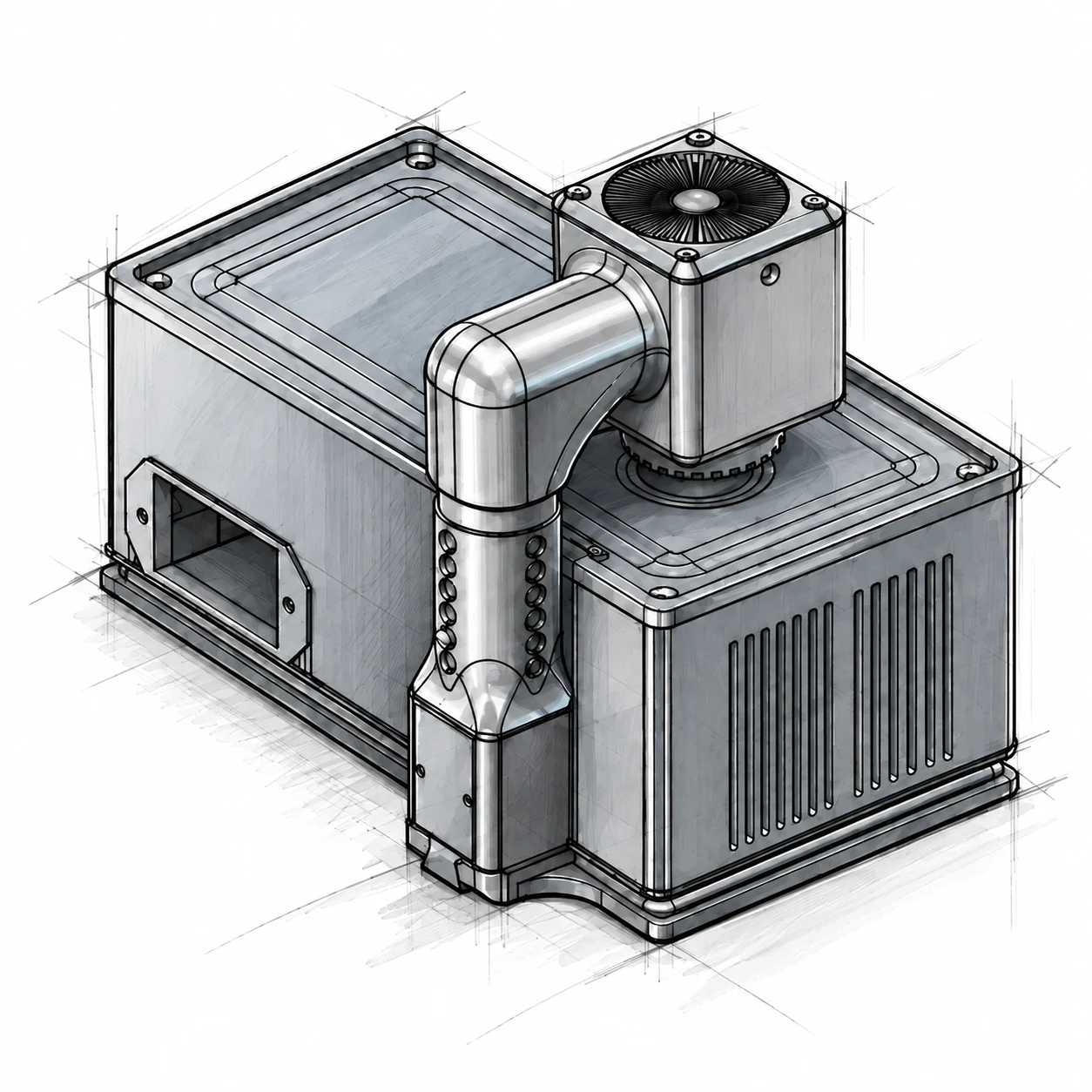
Different drugs reach the brain in different ways. We are building a pharmacokinetic library across several compounds to understand how Apertum changes their exposure in the brain, and which candidates are most promising to study with our technology.

Through studies in rats, we compare drug concentrations over time and across conditions. The aim is a growing evidence base for selecting and prioritizing combinations for further investigation.

Design drawing of the rat stimulation device, with a removable coil and rectangular enclosure.

06

Jev Pokémon Trainer

What does an AI need to make the right move?

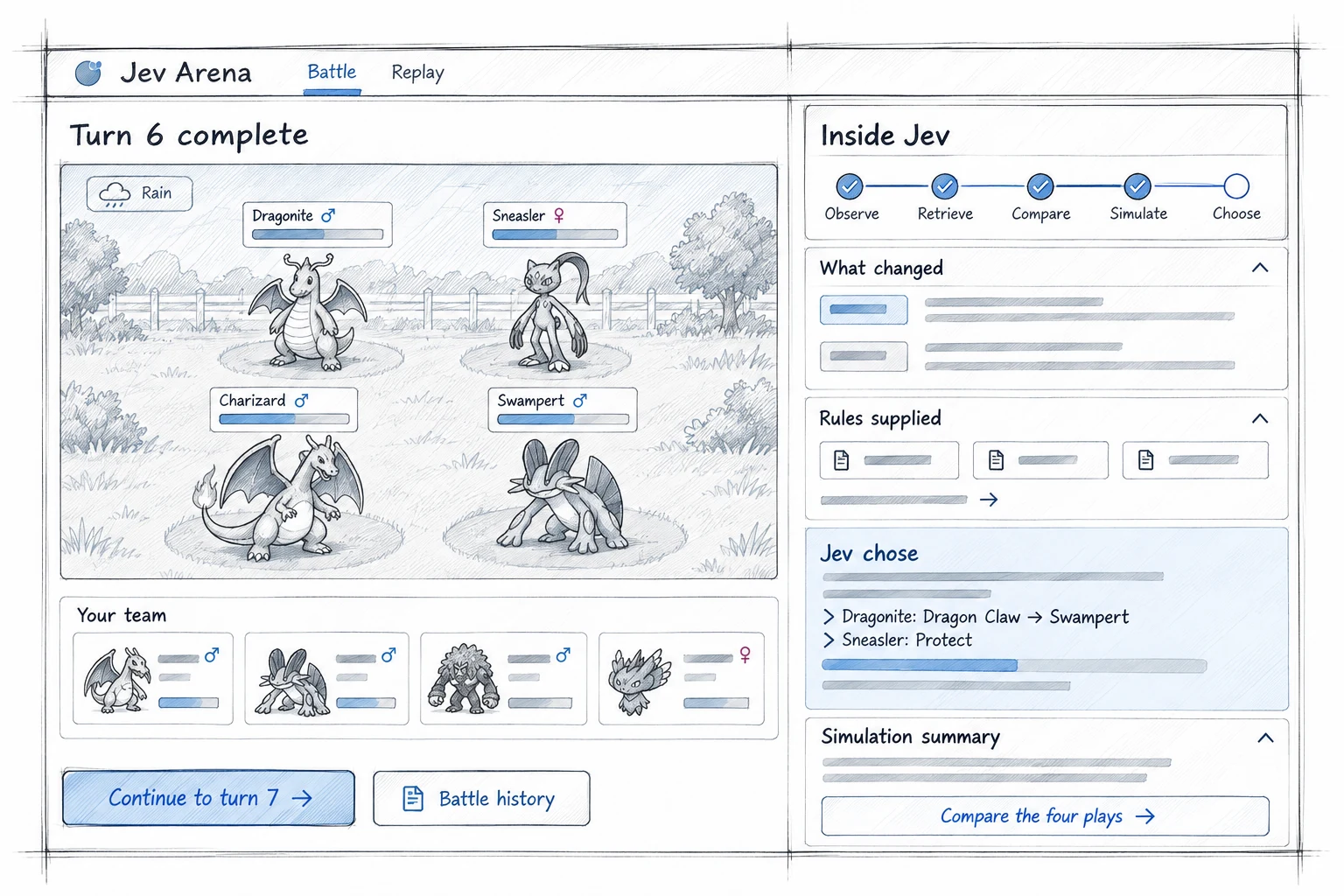
Pikachu has one health point left. Quick Attack could win the turn, yet our trainer chose a move that would never get a chance to land. That small mistake became a project about AI decision-making: what knowledge does an agent need, what should it simulate, and how should we show it the consequences?

With TypeSafe’s Jev, we built a reference library, selected relevant rules, and simulated possible replies. One of the clearest lessons was that even correct evidence can go unused when it is hard to connect to an action. I still beat the agent most of the time, but the day it beat me once made all those experiments feel wonderfully real.

Public demo

Hand-sketched Jev Arena interface with a Pokémon battle, team cards, and an Inside Jev panel showing the decision workflow.

07

OpenCoil

What changes when we change the coil?

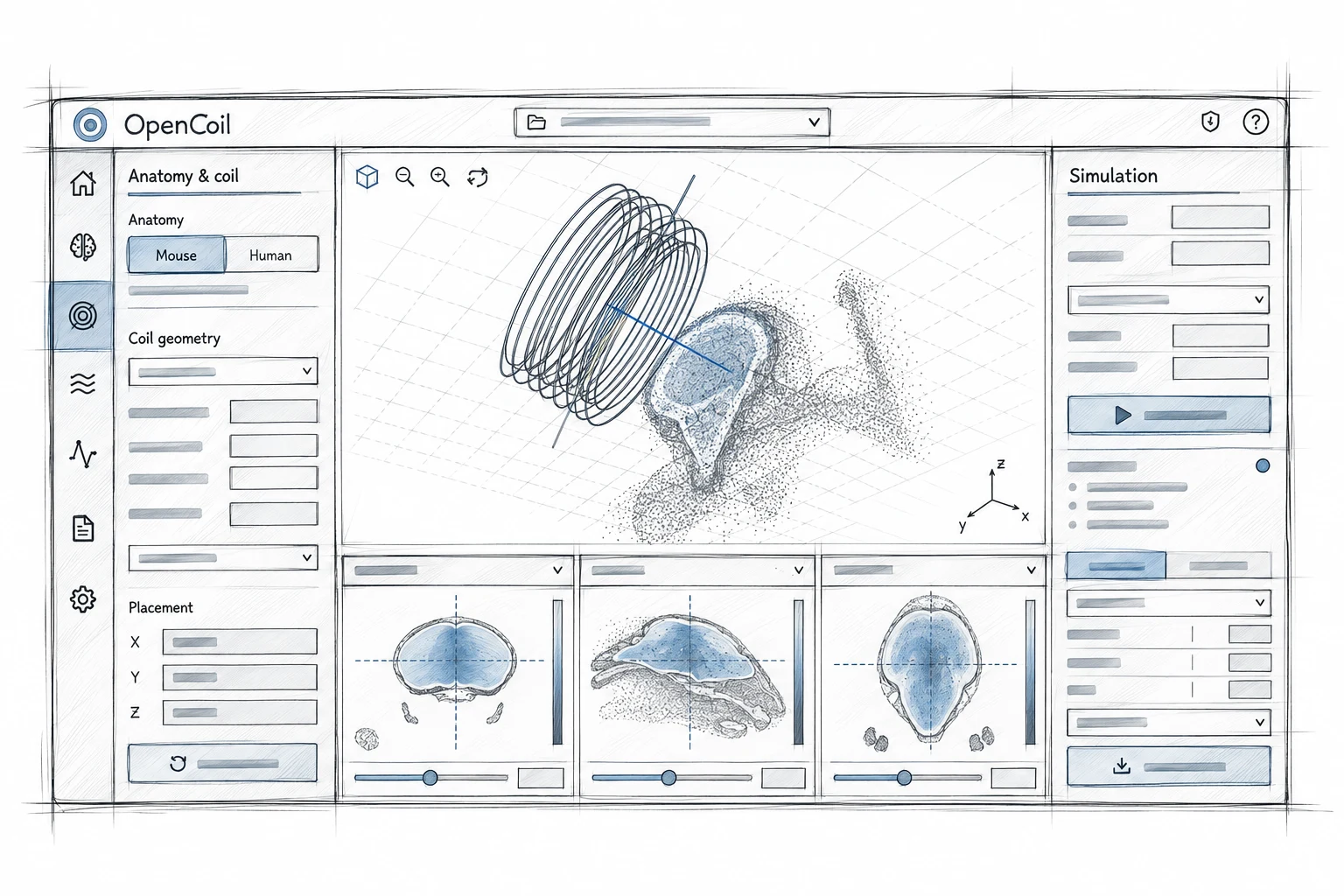
Designing a coil raises questions that a drawing alone cannot answer. OpenCoil connects the shape of the hardware to an anatomical model and the fields calculated around it. It brings together several of my interests: brain stimulation, geometry, simulation, and building software that makes an experiment easier to inspect.

Research prototype

Hand-sketched OpenCoil interface with anatomy and coil settings, a central coil-and-anatomy viewport, three section views, and simulation controls.

Design & engineering

From an idea to an object.

My work on brain stimulation devices, coils, and EEG headsets. Sketches and CAD are part of the process.

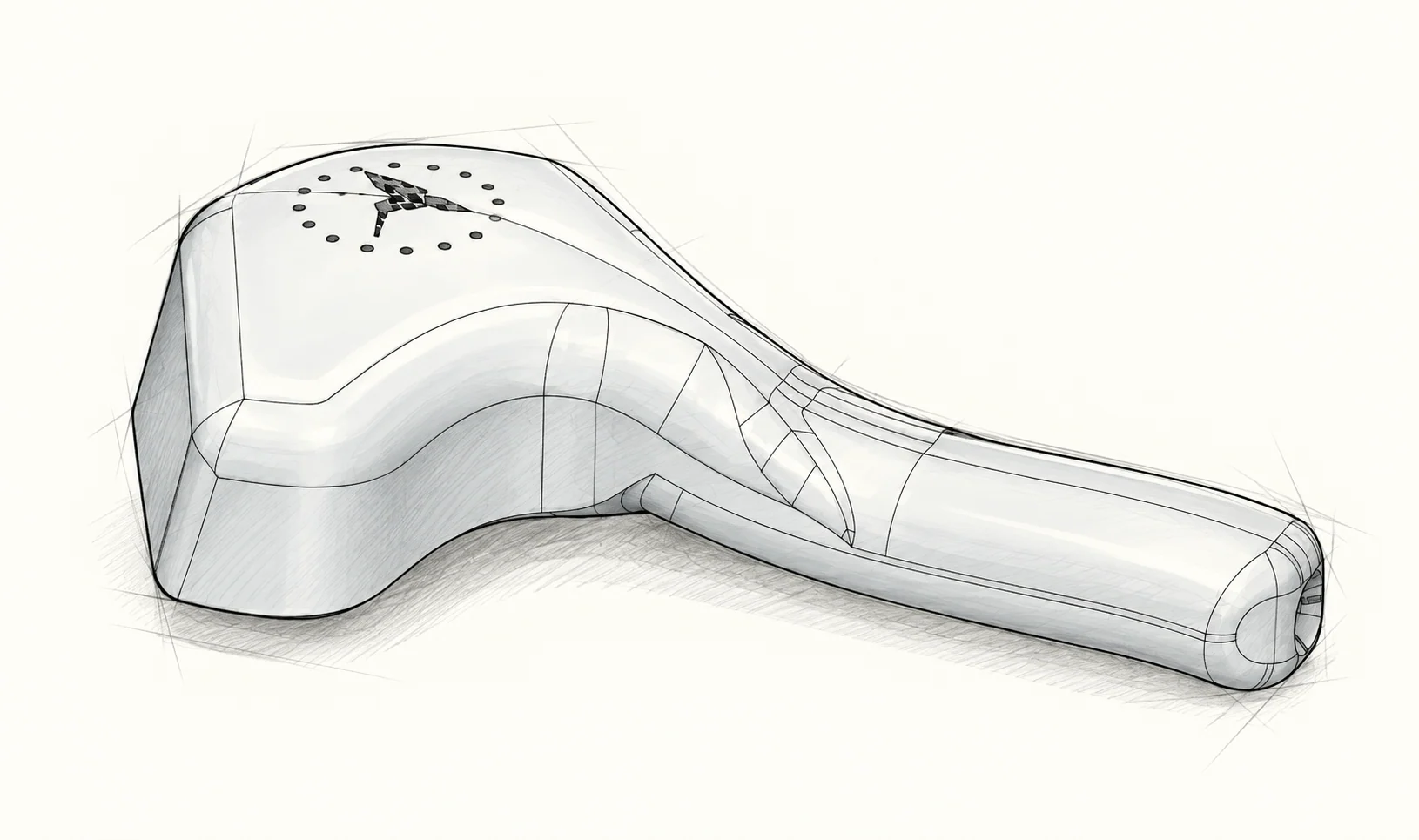
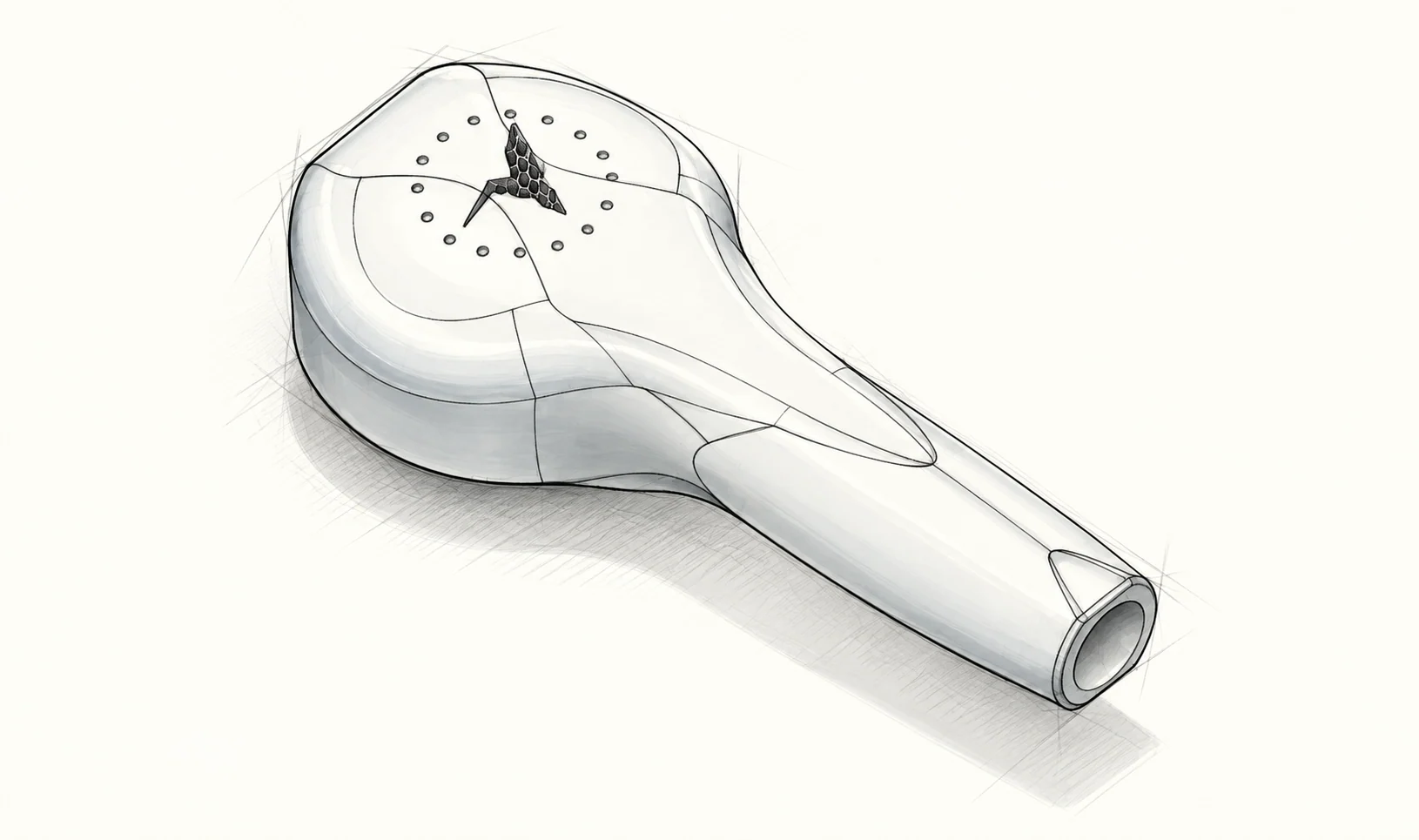
Pro2s — three-quarter view, a pencil-and-marker study of my CAD design.
Design study

Pro2s

A non-invasive brain stimulation device designed with industrial designer Aura Rodríguez. We explored softer, more biological curves to bring a more considered aesthetic to neuromodulation equipment.

See the design
Focus8 — three-quarter view, a pencil-and-marker study of my CAD design.
Design study

Focus8

A figure-eight coil inside a manta ray-inspired shell. I wanted its outer form to follow more biological curves, concealing the familiar eight-shaped geometry within the housing.

See the design
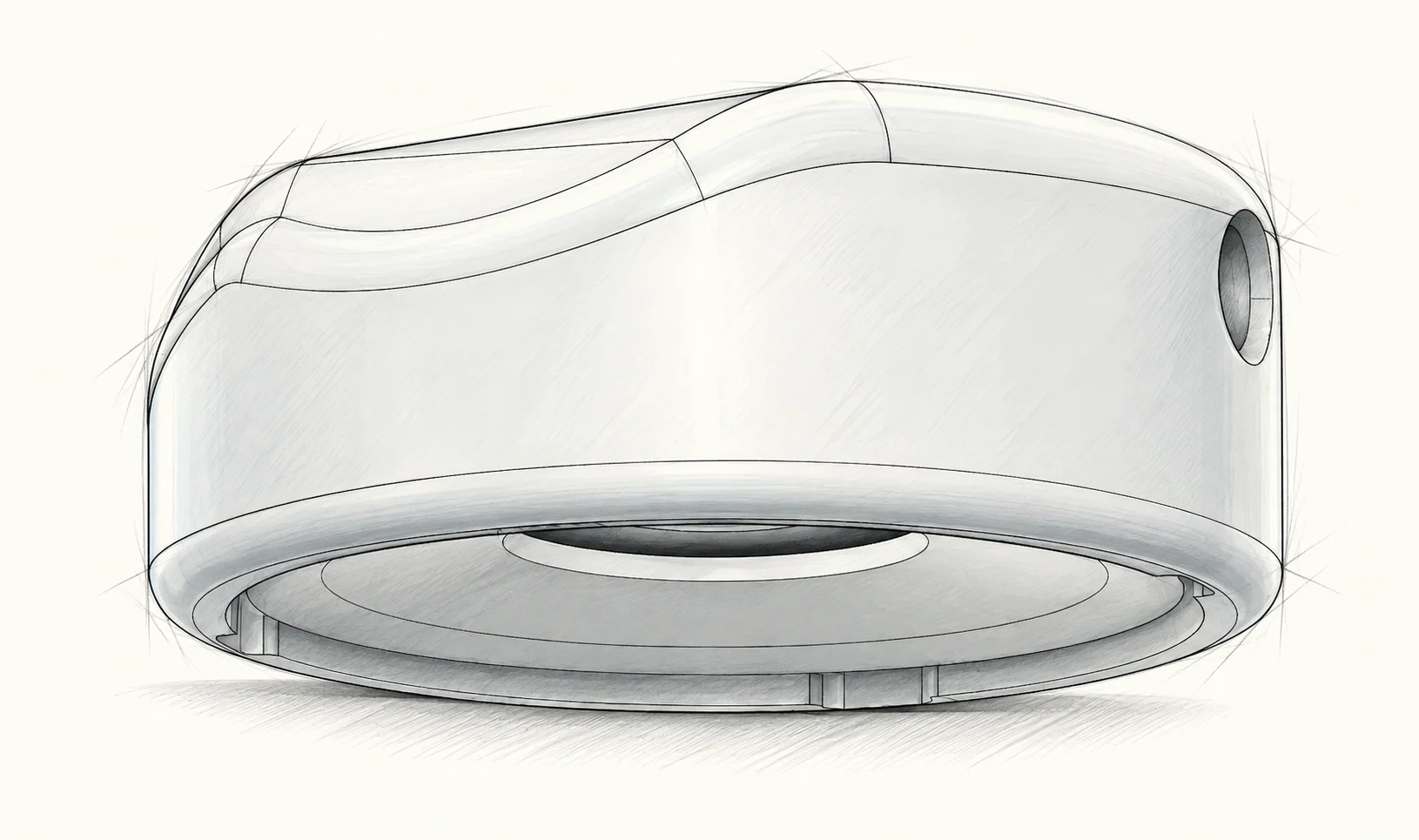
Circular coil — low-angle view, a pencil-and-marker study of my CAD design.
Design study

Circular coil

An update to our circular coil, bringing the cuts and sculpted lines of Pro2s into a more organic coil-shaped housing. Sometimes I like to make a simple form unnecessarily complicated.

See the design
High intensity coil — three-quarter view, a pencil-and-marker study of my CAD design.
Design study

High intensity coil

The original coil looked too much like a geometric lollipop. I wanted stronger, more biological contours and bold, sculpted edges, without taking the design too far into a gaming aesthetic.

See the design
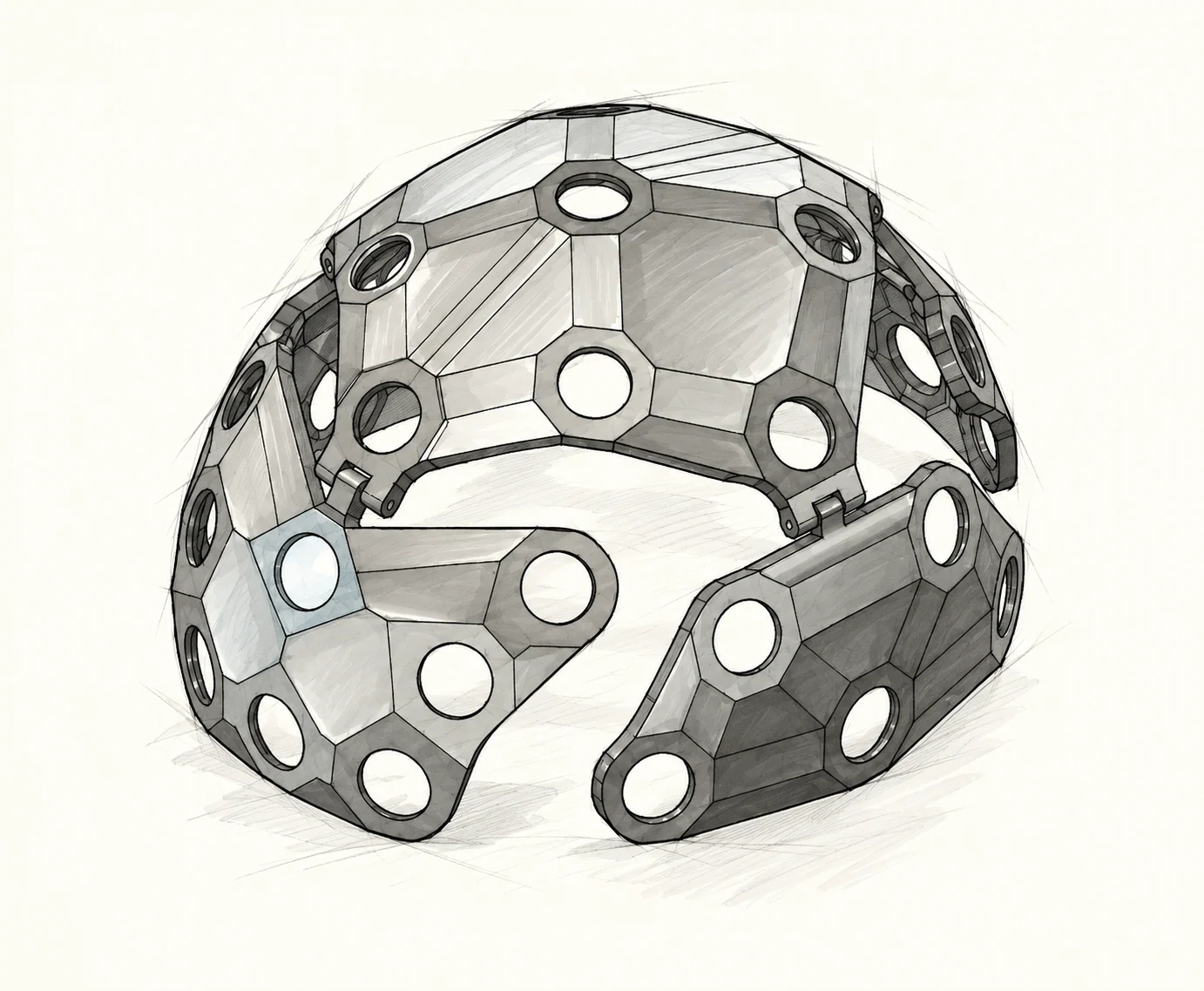
Faceted EEG headset — three-quarter view, a pencil-and-marker study of my CAD design.
Design study

EEG headsets

Two interpretations of OpenBCI’s publicly available headset: one with movable, hinged sections; another with a continuous framework whose organic curves were intended to provide flexibility.

See the design
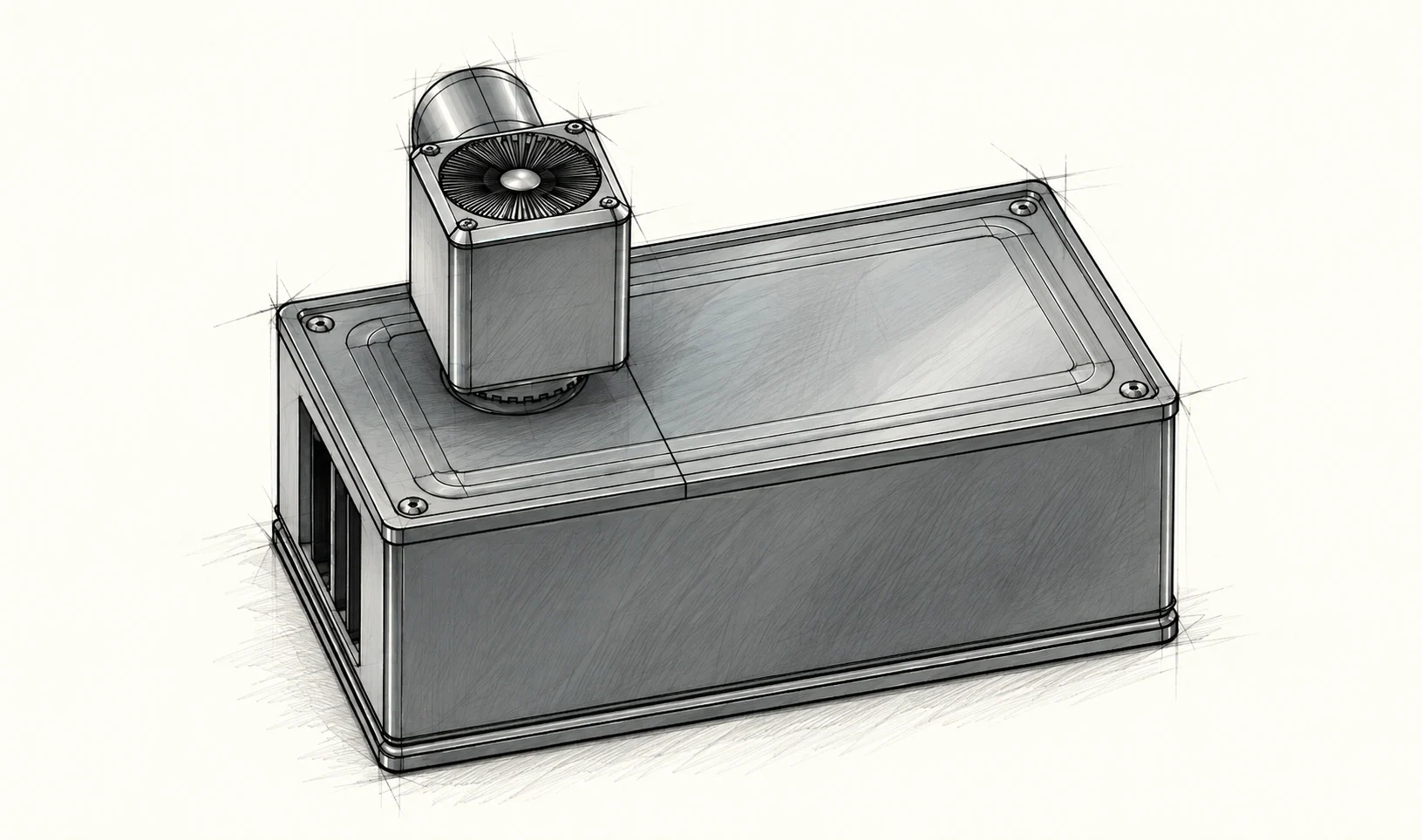
Rat stimulation device — three-quarter view, a pencil-and-marker study of my CAD design.
Rat stimulation device · Design study

Rat stimulation device

Designed for research studies in France, with easy stacking and transport in mind. The coil can be removed, leaving a rectangular prism that is easy to pack and move. The base houses the electronics, ventilation, and power supplies.

See the design
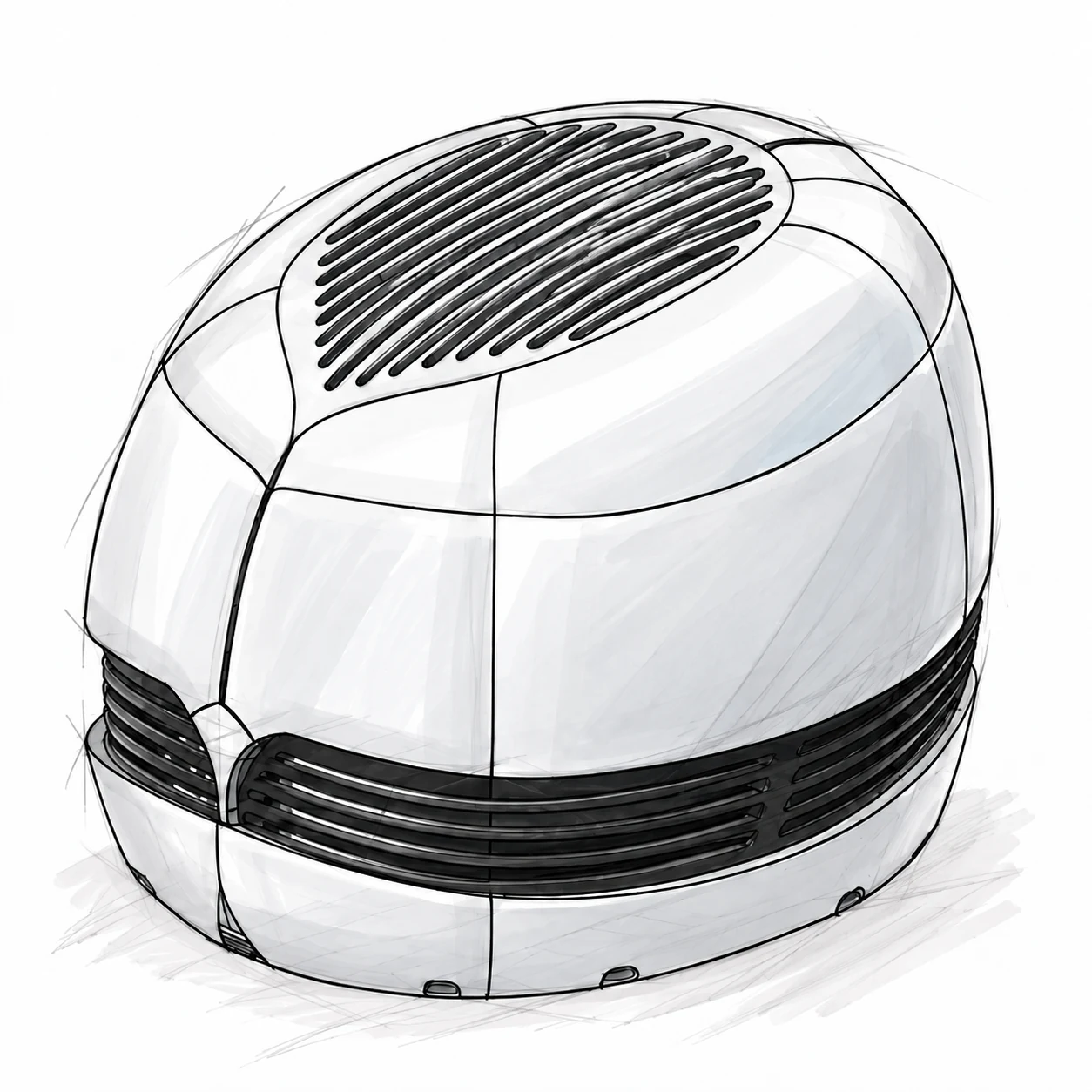
An ink-and-marker study of the large, rounded NHP coil prototype, with diagonal top vents and a dark horizontal ventilation band.
Design study

NHP coil prototype

A coil prototype for non-human primates, used in a study in France. Inspired by hooded hair dryers of the 1970s and 1980s, its large shell makes room for the head, concealed electronics, and ventilation.

See the design

Research · Engineering · Ideas

Good work starts
with a conversation.

Have a research question, a project in mind, or an idea worth exploring together?

Let’s collaborate